

China

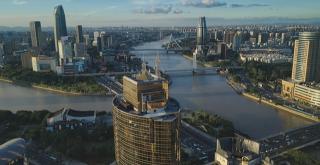
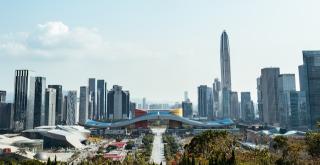
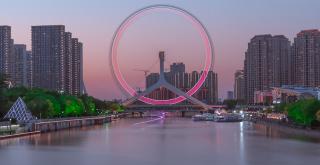
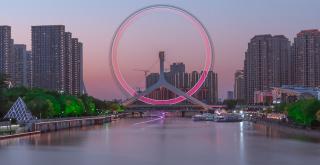
China has demonstrated a strong, sustained commitment to the Global Environment Facility’s Sustainable Cities Program, participating in GEF-6, GEF-7 UrbanShift, and GEF-8 SCIP to advance integrated, low-carbon, and resilient urban development. As one of the world’s most rapidly urbanizing countries—and home to more than 900 million urban residents—China faces complex challenges related to land-intensive growth, air and water pollution, biodiversity loss, and increasing vulnerability to climate impacts. Through GEF-6, pioneering cities such as Beijing, Tianjin, Ningbo, Nanchang, Guiyang, Shenzhen, and Shijiazhuang helped shape national approaches to transit-oriented development (TOD) and integrated land-use and transport planning, creating models that have influenced both national policy and global practice.
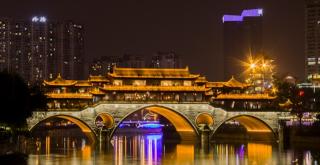
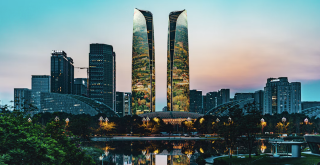
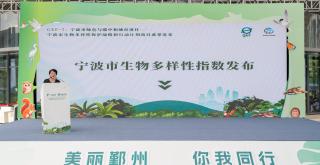
Under GEF-7 UrbanShift, China expanded its focus to ecological planning, carbon-neutrality strategies, and urban biodiversity through work in Chengdu, Chongqing, and Ningbo, as well as across the Chengdu–Chongqing Economic Circle. In GEF-8 SCIP, cities including Beijing, Tianjin, and Shijiazhuang continue to deepen integrated planning, nature-based solutions, circular economy approaches, and investment-ready urban pipelines through the GPSC Global Knowledge Platform.
China’s multi-cycle engagement has positioned it as a cornerstone of the global sustainable cities agenda. Its policy innovations, large-scale pilots, and technical leadership offer valuable lessons for GEF cities worldwide, demonstrating how integrated planning, ecological restoration, and low-carbon development can be scaled across diverse metropolitan regions.
UNIDO serves as the Implementing Agency. The Executing Agencies are the Ministry of Industry and Information Technology and the Ministry of Natural Resources.
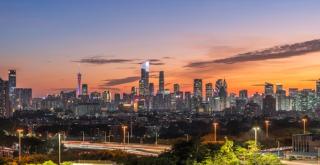
This project targets the Beijing-Tianjin-Hebei (BTH) region, one of China's most economically significant urban areas, which has experienced rapid urbanization, ecosystem service losses, and worsening environmental quality. The project will focus on integrating nature-based solutions to restore and enhance ecosystems, promoting circular economy practices, and adopting sustainable approaches to transportation, construction, and energy use. Key actions include the deployment of green infrastructure, renewable energy systems, and low-emission technologies, alongside efforts to improve governance, incentivize innovation, and engage the private sector. The initiative aims to reduce carbon emissions, enhance environmental performance, and create a more sustainable and resilient urban environment across the BTH region.
Component 1 – Sustainable City Standards, Policies, and Enabling Framework
- Development of cross-cutting urban and spatial planning guidelines with sustainability evaluation criteria (gender- and youth-responsive)
- Preparation of BTH Regional Sustainable Cities Roadmap and integration into municipal spatial plans
- Establishment of regional institutional coordination mechanisms for cross-sector urban sustainability governance
- Development of sector-specific standards and policies for low-carbon transport, green buildings, renewable energy, and urban biodiversity
- Production of technical knowledge products and data analytics on cost-effectiveness and environmental performance of sustainable urban technologies
- Preparation of replication and scale-up plans for sector-specific sustainable city initiatives across BTH cities
Component 2 – Sustainable City Demonstrations (Beijing–Tianjin–Hebei Region)
- Intelligent Connected Vehicle (ICV) and smart traffic system demonstrations, including traffic-light optimization, congestion management, intercity logistics platooning, and energy-efficiency performance validation
- Green building and energy efficiency demonstrations, including performance benchmarking, cost-optimization validation, and replication modeling
- Urban renewable energy system integration, including solar PV optimization, EV charging infrastructure deployment, and geothermal efficiency upgrades
- Urban biodiversity conservation and ecosystem management demonstrations, linked to monitoring systems and improved management practices
- Integrated performance monitoring framework for multi-sector demonstrations, generating emissions reduction, cost-effectiveness, and scalability data
Component 3 – Capacity Building, Knowledge Exchange, and International Cooperation
- Structured regional training and exchange programs across BTH cities for sustainable urban systems integration
- Problem-solving workshops with municipal officials, industry actors, and technical experts on sector-specific sustainable city solutions
- International knowledge exchange and coordination through the GEF Sustainable Cities Integrated Platform (SCIP)
- Gender-responsive participation mechanisms in technical and policy capacity-buildings
Component 4 – Monitoring, Evaluation, and Adaptive Management
- Integrated monitoring system for multi-sector demonstrations including gender.
- Performance tracking of GHG mitigation, energy efficiency, renewable capacity, and biodiversity indicators.
- Sustainable city related cross-cutting and sector-based standards and guidelines, plans, policies, information products, and investment replication/ scale-up plans developed and, together as a systems approach, raise motivation and confidence of government entities, businesses, and other partners in the BTH Region to pursue integrated sustainable urban development and invest/ participate in specific initiatives, especially low carbon transport, building energy efficiency, urban renewable energy, and urban biodiversity initiatives.
- Successful demonstration of innovative solutions for BTH city and regional sustainability in intelligent connected transport, green buildings, urban renewable energy, and urban biodiversity/ ecosystems, featuring advanced technologies and achieving improved technical and cost viability, putting demo cities and the region on course for scale-up
- Increased knowledge, capacity, and exchange of government, industry, experts, technical personnel, engineers, students, and general citizens regarding sustainable city concepts and measures in various sectors achieved through domestic and international activities.
Total GEF Grant (USD):
12,800,000
Total Co-Financing (USD):
120,000,000
World Bank Country Profile (Data Portal)
For broader socioeconomic and environmental context, consult the World Bank Country Data Profile. It provides up-to-date indicators on economic performance, social development, climate and environmental metrics, as well as an overview of World Bank operations and financing in the country. Access the country profile here.
GEF Country Profile
For information on Global Environment Facility engagement, see the GEF Country Profile. It presents an overview of GEF-funded projects, thematic areas of intervention, implementing partners, and country resource allocations, offering insight into environmental investment priorities and ongoing initiatives. Access the country profile here.
WOFI Country Profile
For additional insights on subnational public finance, see the OECD Subnational Government Finance Observatory (WOFI) Country Profile. It provides internationally comparable data on revenues, expenditures, investment, debt, and fiscal arrangements across levels of government, offering a useful reference on fiscal capacity and decentralization. Access the country profile here.
Keywords