

The Global Platform for Sustainable Cities (GPSC)

GPSC provides access to cutting-edge tools, data, and expertise, promoting an integrated approach to urban planning, design, and financing.

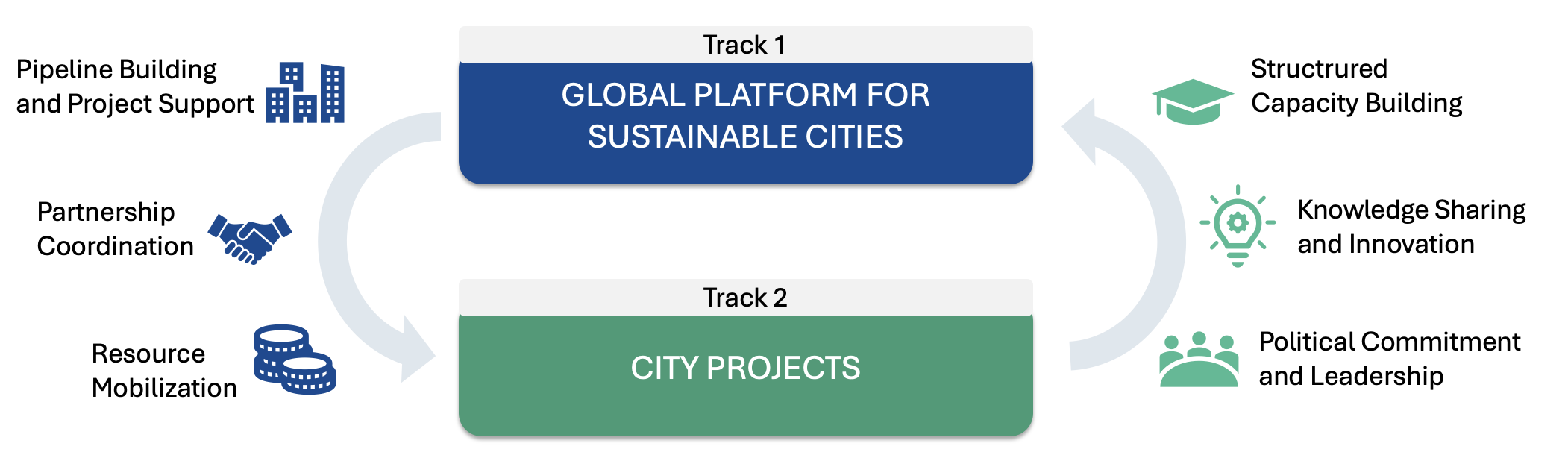
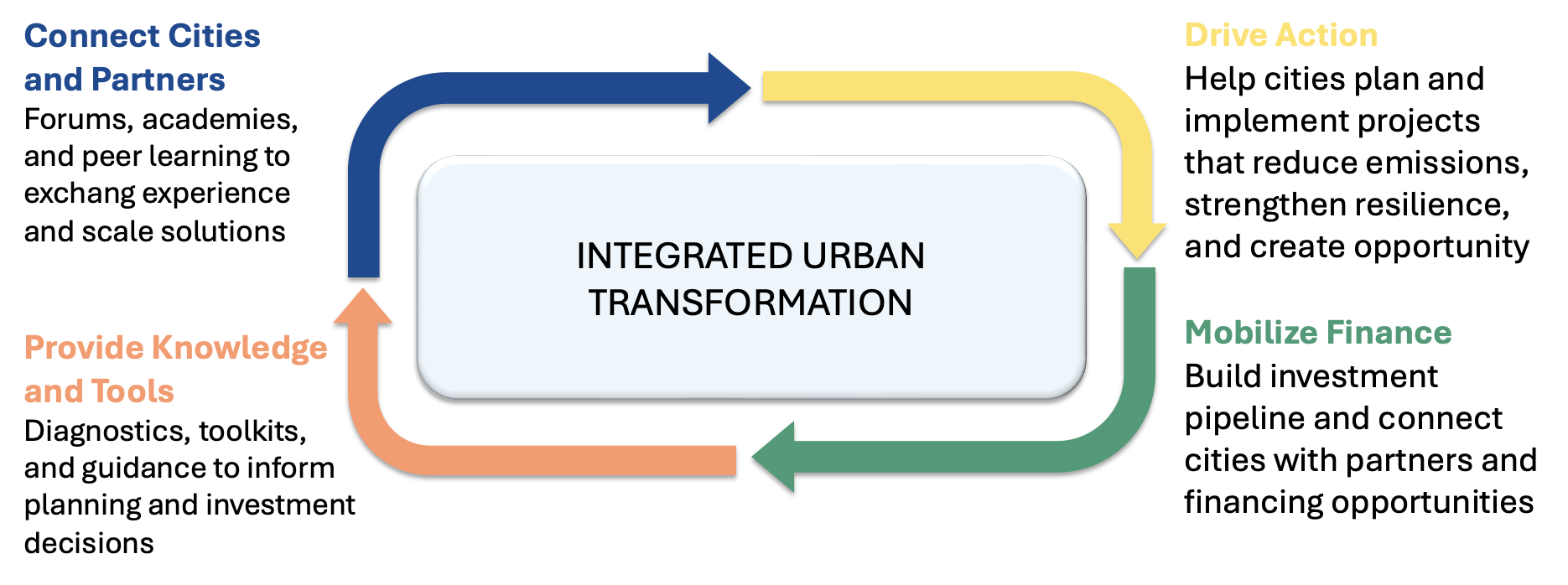
The Global Platform for Sustainable Cities (GPSC) is a World Bank-led knowledge platform, with financial support from the Global Environment Facility (GEF), that empowers cities to advance sustainable urban development. GPSC provides access to cutting-edge tools, data, and expertise, promoting an integrated approach to urban planning, design, and financing.

By bringing together the experiences of over 100 cities across 40 countries and a broad network of global partners, GPSC fosters collaboration and shared learning to accelerate transformative urban solutions.

Established in 2016, GPSC serves as the coordination and knowledge hub of the GEF Sustainable Cities Integrated Program (SCIP), a multi-phase initiative helping cities tackle climate change, biodiversity loss, pollution, and urban vulnerabilities through scalable solutions. GPSC offers a convening space for local leaders, practitioners, and stakeholders to share knowledge, exchange experiences, and develop integrated urban strategies across key themes including Climate, Culture, Data, Decarbonization & Circular Economy, Design, Finance, Inclusivity, Mobility, Nature, and Planning.

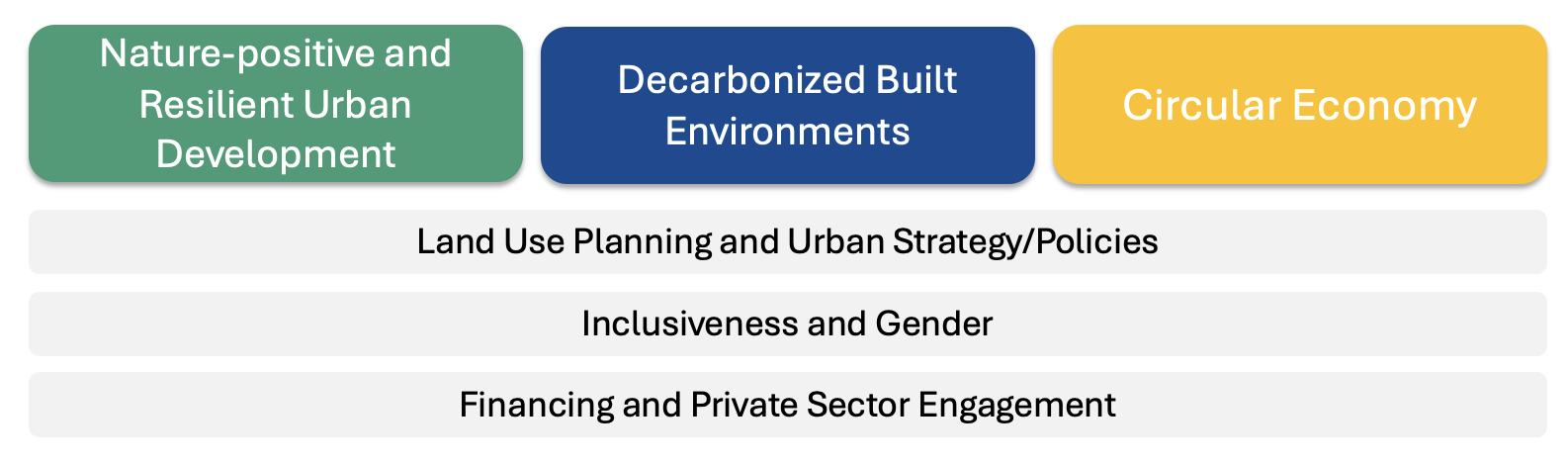
Over its operation, the GEF Sustainable Cities programs—through GEF-6 and GEF-7 cycles—have supported dozens of cities worldwide with hundreds of millions of dollars in GEF grants, leveraging several billion dollars in co-financing. Building on this foundation, the latest GEF-8 Sustainable Cities Integrated Program (SCIP) expands GPSC’s network and substantive work, integrating previous initiatives including GPSC (GEF-6) and UrbanShift (GEF-7) to maximize impact. GEF-8 emphasizes private sector engagement, encouraging cities to collaborate with businesses, investors, and service providers in designing and implementing solutions that improve urban services, reduce waste, and strengthen local food systems.

Through these efforts, GPSC strengthens collaboration between public and private sectors, supporting cities to deliver measurable global environmental benefits while fostering inclusive, resilient, and sustainable urban futures.
 

GPSC Themes

Design

Urban design shapes the physical form and experience of the city. By integrating climate-responsive architecture, public spaces, and mixed-use neighborhoods, sustainable urban design enhances...

Circular

Circular cities reduce waste and regenerate resources by rethinking production, consumption, and material flows. Through circular design, green construction, and sustainable urban systems, cities...

Culture

Culture shapes how cities grow and connect. Embedding cultural heritage, creativity, and local identity in urban planning strengthens community ownership, fosters inclusive public spaces, and supports sustainable lifestyles that value both people and place.

Data

Urban data and digital tools empower evidence-based planning and decision-making. By integrating geospatial analysis, open data, and performance tracking, cities can design smarter, more transparent, and more accountable sustainability actions.

Climate

An estimated 70 percent of global greenhouse-gas emissions come from cities. Rapid urbanization is expected to continue, intensifying even further the energy use in the cities. Yet there is also an opportunity. Cities are also where the greatest energy efficiencies can take place.

Nature

Nature-positive cities restore ecological systems through green corridors, urban forests, wetlands, and parks. Integrating biodiversity and nature-based solutions enhances resilience to climate risks, improves well-being, and reconnects people with the natural environment.

Inclusivity

Inclusive urban transformation ensures that all residents—especially women, youth, and vulnerable groups—benefit from sustainable growth. By integrating equity, accessibility, and participation into planning, cities build social cohesion and resilience.

Mobility

Sustainable mobility links people, jobs, and opportunities through low-carbon, accessible, and equitable transport systems. Compact urban design and investment in public transit, cycling, and...

Finance

Innovative urban finance drives transformation by linking knowledge and investment. Cities mobilize public and private capital, adopt blended finance and green bonds, and integrate nature and climate...

Planning

Urban planning provides the framework for sustainable city transformation. It aligns land use, infrastructure, housing, mobility, and environmental systems through integrated, data-driven strategies...