

GPSC’s Webinar Series: Bringing Nature to Cities
19 SEPTEMBER 2025 /Blog
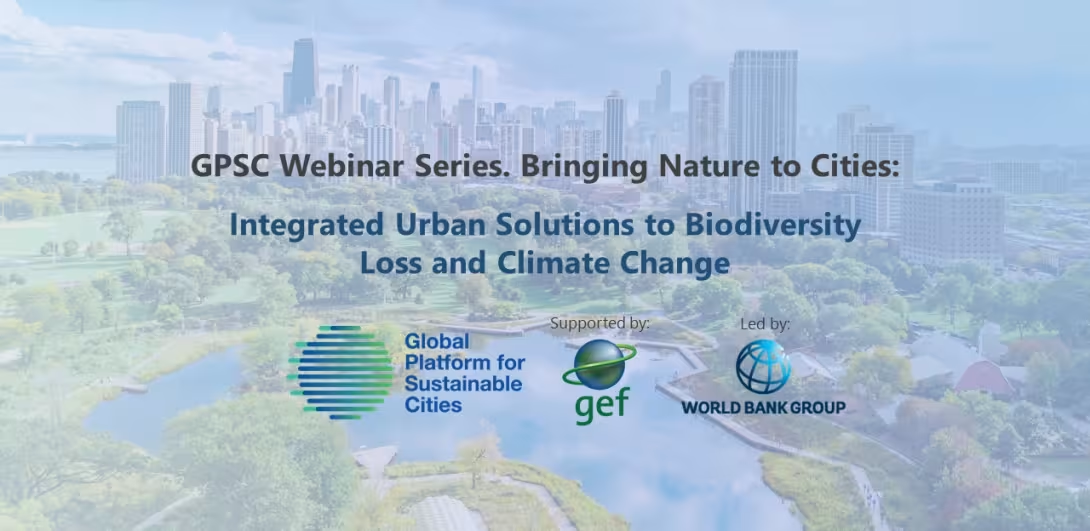
The World Bank’s webinar series “Bringing Nature to Cities: Integrated Urban Solutions to Biodiversity Loss and Climate Change” promotes integrated urban solutions for cities to tackle biodiversity loss and climate change. Co-hosted by the Global Platform for Sustainable Cities (GPSC) and the Global Program on Nature-Based Solutions for Climate Resilience, the series of thematic events provides an online knowledge exchange platform connecting policymakers, practitioners, and experts to further mainstream biodiversity considerations into cities and development projects.
These timely discussions leads up to and augment the 15th Conference of the Parties (COP15) of the Convention on Biological Diversity (CBD) 11–15 October 2021 and the UN Climate Change Conference (COP26) happening 1–12 November 2021 in Glasgow, United Kingdom. Four key themes were covered during the series: (1) Urban ecological and land use planning for environmental conservation and climate resilience; (2) Urban nature, biodiversity, and carbon neutrality; (3) Nature-Based Solutions (NBS) for climate-resilient cities; and (4) Investing in nature. The events are being presented in partnership with the Global Environment Facility (GEF), CBD Secretariat, World Economic Forum, International Union for the Conservation of Nature (IUCN), ICLEI—Local Governments for Sustainability, the European Union’s NATURVATION project, Alexander von Humboldt Institute, and Biophilic Cities.
Follow the links below to access sessions’ key takeaways, video recordings, and presentation slides