

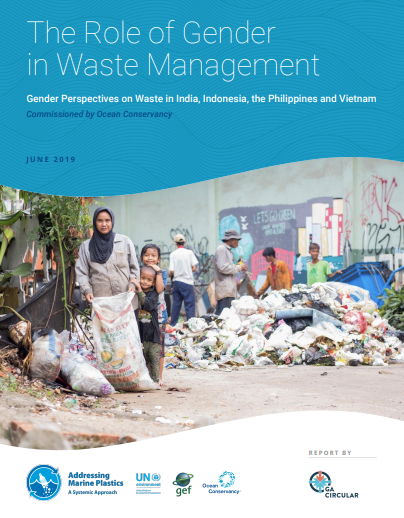
Gender Analysis when applied to the field of waste management, especially in developing nations such as India, Indonesia, the Philippines, and Vietnam, can provide unique insights into the waste sector while also serving as a tool for policymakers and program developers to improve and develop the waste sector. Many questions are answered against the backdrop of the waste landscape in each of the countries.
India, Indonesia, the Philippines and Vietnam all share many similarities with respect to the state of waste management - growing populations and consequently growing waste, limited infrastructure and a heavy reliance on the informal sector for collection and recovery of recyclables. In the absence of source-segregation and segregated collection, much of the household waste collected is picked through by street recycling pickers for recyclables which are then sold to junk shops and scrap dealers. These junk shops are small-scale businesses, often unregistered, that then sell to larger aggregators, and the materials eventually flow to processors and then domestic or international recyclers.