

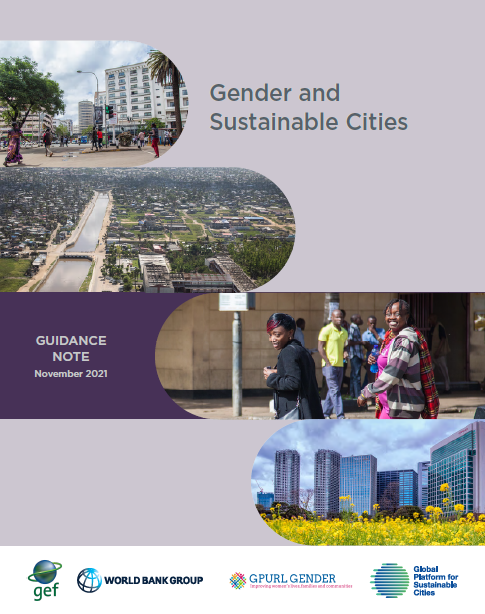
Gender and Sustainable Cities

November 14, 2021

Climate change is set to exacerbate existing inequalities across regions and negatively impact already-vulnerable populations: the urban poor will be hit the hardest by the unevenly balanced climate change impacts. More than 1 billion members of the global population are slum-dwellers: they are the poorest and most vulnerable to climate risks due to overcrowding, substandard housing and living conditions, and lack of housing rights, physical infrastructure, and access to services. Women often constitute the majority of slum dwellers: data from 59 developing countries across Latin America and the Caribbean, Central and Southern Asia, and sub-Saharan Africa has indicated that women are overrepresented in slums in 80 per cent of these countries, facing the highest risk to climate change. Major environmental issues in cities, such as air pollution, biodiversity loss, deforestation, waste disposal and exposure to toxic chemicals, are further exacerbated as a result of climate change and tend to impact women and girls the most.
 
Women’s increased vulnerability to climate change is the result of existing gender inequalities rooted in socio-economic and cultural norms. Women’s lack of adaptive capacity to the adverse impacts of climate change is closely linked to a lack of ownership and control over resources due to legal, cultural and social norms, gender differences in property rights, access to skills and technology, gendered division of labor access to information and social capital, as well as voice and agency. According to the United Nations Development Programme (UNDP), 80 percent of people displaced by climate change are women. 
Related content
View all

Inclusivity

Gender and Sustainable Cities

Climate change is set to exacerbate existing inequalities across regions and negatively impact already-vulnerable populations: the urban poor will be hit the hardest by the unevenly balanced climate
Knowledge Product

Learn more

Inclusivity

Learning from Vietnam’s urban upgrading projects

When economic and political reforms were introduced in Vietnam to transition from a centralized economy to a socialist-oriented market economy in 1986, urbanization started to accelerate. The central
Knowledge Product

Learn more

Inclusivity

Health, Safety and Dignity of Sanitation Workers : An Initial Assessment

The global sanitation workforce bridges the gap between sanitation infrastructure and the provision of sanitation services. Sanitation workers provide an essential public service but often at the cost
Knowledge Product

Learn more