

Philippines
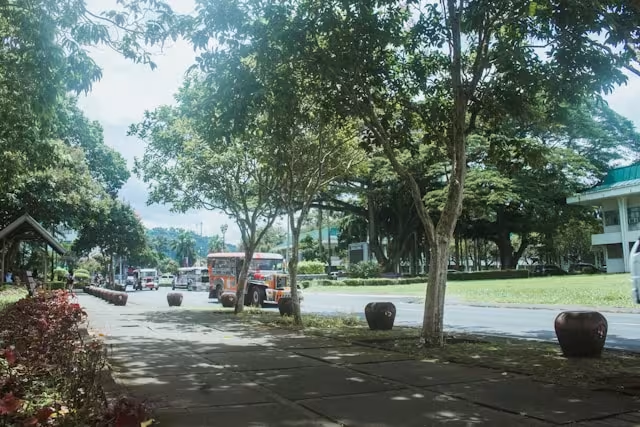
Photo by Lance Lozano / Unsplash
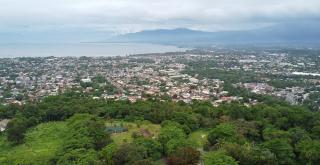
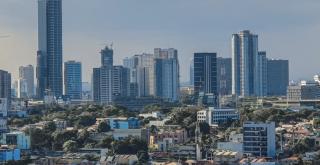
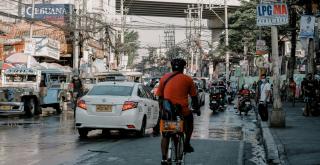
The Philippines participates in the GEF-8 Sustainable Cities Integrated Program (SCIP) to strengthen climate resilience, advance low-carbon development, and improve the livability of rapidly growing urban areas. As an archipelago highly vulnerable to typhoons, flooding, sea-level rise, and heat extremes, the Philippines faces urgent urban challenges linked to informal settlement expansion, mobility constraints, waste management pressures, and environmental degradation.
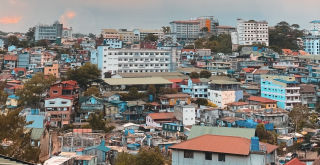
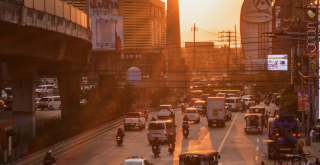
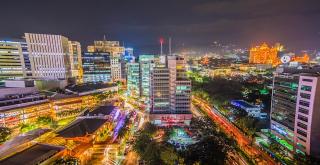
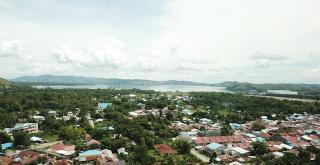
Through GEF-8 SCIP, cities such as Baguio, Quezon City, Caloocan, Cebu, Davao, and Cotabato are scaling nature-based solutions, decarbonized and climate-resilient infrastructure, circular economy practices, and integrated land-use planning. The program also enhances private-sector engagement and municipal finance capacities to support investment-ready project pipelines. The Philippines' active participation in the GPSC Global Knowledge Platform contributes important lessons on disaster risk reduction, community-centered climate adaptation, and integrated urban planning, helping shape global dialogue on resilient and inclusive city development.
UNDP serves as the Implementing Agency. The Executing Agency is the Biodiversity Management Bureau, Department of Environment and Natural Resources.
The applied project strategy is barrier removal, which consists in permanently eradicating all identified hindering barriers that currently are preventing local government units of the selected pilot cities to achieve global environmental benefits (GEBs), such as: greenhouse gases (GHG) emissions reduction; biodiversity and ecosystems conservation; rehabilitation of degraded land, wetland and forests; enhancement of socio-economic standards; and improved living conditions of the population, including informal settlers and vulnerable groups.
Although the issues among Philippine’s cities are similar, what varies significantly is the extent to which these problems affect the population, urban infrastructures, ecosystems and biodiversity, as well as the political support, the available resources and the stakeholders’ capacity that each city possesses to cope with these challenges. Hence, the GRC project has been designed for, and it will be implemented in the cities of Baguio, Caloocan, and Quezon City in Luzon, Cotabato and Davao in Mindanao, and Cebu in Visayas, all reflecting the diverse urban realities across the Philippines. The project is organized into four components, one for each identified barrier.
Component 1 – Policy/regulatory framework and institutional coordination and cooperation mechanisms to catalyze a shift towards integrated urban development planning supported by low-carbon, climate-resilient and nature-positive (LCCRNP) solutions
- Institutionalize an inclusive inter‑agency coordination mechanism among key stakeholders for the formulation and promotion of integrated LCCRNP policies and strategies
- Support the mainstreaming of LCCRNP solutions in city policies and ordinances o Design, promote, and approve nature‑positive LCCRNP solutions
- Integrate LCCRNP solutions in planning guidelines and standards
Component 2 – Financial mechanisms and pilot financial instruments to support the implementation of bankable LCCRNP technologies and practices
- Develop and implement city investment plans in cooperation with banking institutions to financially support LCCRNP urban projects
- Establish PPPs on technically and financially viable integrated LCCRNP urban projects
- Design and implement financial mechanisms/schemes and pilot financial instruments to support the adoption of LCCRNP
Component 3 – Demonstration of technically feasible and cost-effective pilot LCCRNP investments to support integrated sustainable urban development
The following ongoing and planned (and budgeted) urban development projects were identified as suitable baseline for pilot investment (demonstration) projects:
- Green and resilient socialized housing for informal settler families (ISF): “QCitizen Homes” of the Quezon City Government.
- Enhanced urban community resilience through wetland restoration in Cotabato City.
- Philippine Eagle Habitat Restoration as a model for urban nature-positive development in Davao City.
- Expansion and enhancement of urban green spaces in Baguio City.
- Urban Agro-ecological Innovation for Climate Resilience and Biodiversity in Caloocan city.
- Enhancement of the Green Loop transportation project in Cebu City – Pilot integration of water and land transport
- Integrated Low Carbon and Nature-Positive Urban Electricity Supply System in Cotabato City
- Integrated Public Transport System Modernization in Davao City.
Component 4 – Capacity building on the design of projects optimizing resource use and energy efficient infrastructures, behavioral change of stakeholders towards supporting integrated sustainable urban development, and information sharing with the SCIP participating countries
- Develop and operationalize a citywide biodiversity knowledge & training ecosystem
- Institutionalize an inclusive Technical Advisory Group (TAG) and information‑sharing mechanism
- Implement a citywide, gender‑responsive awareness program
- Establish a knowledge exchange for the upscaling of biodiversity-friendly solutions
- City policies and regulations enabling the formulation of integrated urban development plans in six selected Philippine cities that adopt LCCRNP solutions are in place and strictly enforced
- Investments of City governments and the private sector in feasible and valuable integrated LCCRNP urban development projects to provide climate mitigation, adaptation, and resilience benefits while enhancing the socio-economic status of the population, including vulnerable groups are enabled.
- Technically feasible and cost-effective integrated low-carbon, climate-resilient, and nature-positive urban development projects (public and private) are increasingly implemented in the six selected cities.
- Capacities of LGU staff and key stakeholders for the design of projects optimizing resource use and energy efficient infrastructures, behavioral change of stakeholders towards supporting integrated sustainable urban development, are strengthened and information and lessons are shared with the Sustainable Cities Integrated Program (SCIP) participating countries.
Total GEF Grant (USD)
11,932,415
Total Co-financing USD)
32,516,429
World Bank Country Profile (Data Portal)
For broader socioeconomic and environmental context, consult the World Bank Country Data Profile. It provides up-to-date indicators on economic performance, social development, climate and environmental metrics, as well as an overview of World Bank operations and financing in the country. Access the country profile here.
GEF Country Profile
For information on Global Environment Facility engagement, see the GEF Country Profile. It presents an overview of GEF-funded projects, thematic areas of intervention, implementing partners, and country resource allocations, offering insight into environmental investment priorities and ongoing initiatives. Access the country profile here.
WOFI Country Profile
For additional insights on subnational public finance, see the OECD Subnational Government Finance Observatory (WOFI) Country Profile. It provides internationally comparable data on revenues, expenditures, investment, debt, and fiscal arrangements across levels of government, offering a useful reference on fiscal capacity and decentralization. Access the country profile here.
Theme