Senegal: Sustainable Cities Management Initiative
19 SEPTEMBER 2025 /Blog
The initiative
The Senegal government, together with the World Bank, is setting a national framework for urban governance that integrates sustainability, city-level training, detailed Urban Plans for pilot cities integrating climate risks and sustainability, new plans correcting existing discrepancies, pilot projects, coastal and natural areas planning and investment, and knowledge sharing.
Currently, there are several projects undergoing in Senegal, mainly in Greater Dakar, Diamniadio and Saint Louis, that aim to (1) integrate climate risks and other sustainability aspects in the planning and management process and (2) promote resource efficiency and cleaner production in industries, integrated waste management and sustainable energy use.
In order to share the best practices, the implementation agency has produced the following knowledge reports:
- Providing territorial authorities with urban planning and management tools that integrate climate risk. English | French
- Diamniadio: Planning a new sustainable city. English | French
- Saint-Louis: Ensuring the sustainable development of a historic city in danger and its surrounding area. English | French
- Eliminating flooding in a sustained manner through innovative drainage systems. English | French
- Promoting necessary reforms to ensure the sustainable operation and maintenance of drainage systems. English | French
- Promoting community engagement to support the resilience of local populations and the preservation of drainage systems. English | French
- Investing in community projects to boost sustainable urban development. English | French
- PROGEP: A sustainable solution for urban flood management. English | French
- PROGEP: From flood control to the promotion of sustainable cities. English | French
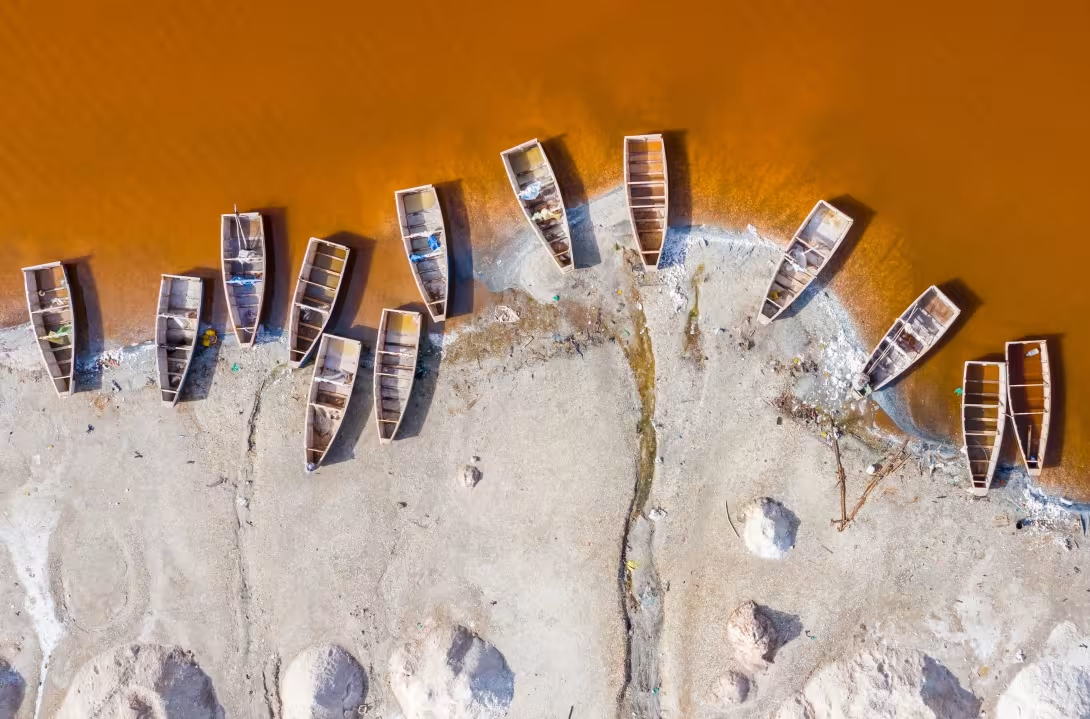
Photo by Curioso Photography on Unsplash