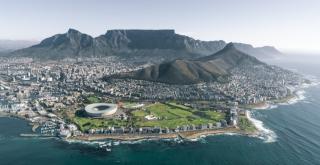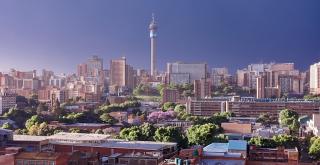


South Africa

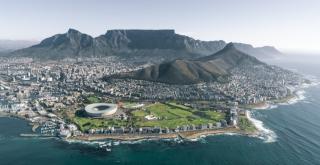
Photo by Kelly / Pexels
South Africa has been a key partner in the Global Environment Facility’s Sustainable Cities Program across both GEF-6 and GEF-8 SCIP, advancing integrated, climate-resilient, and inclusive urban development. Under GEF-6, South African cities strengthened their planning frameworks, explored low-carbon infrastructure options, and advanced data-driven approaches to sustainable urban management. Building on this foundation, GEF-8 SCIP supports Johannesburg and three district municipalities, Gert Sibande (Mpumalanga), Vhembe (Limpopo), and Joe Gqabi (Eastern Cape), focusing on metropolitan-scale integration, nature-based solutions, circular economy approaches, and strengthened municipal finance and PPP frameworks..
As South African cities confront challenges related to rapid population growth, service delivery pressures, ecological degradation, and climate vulnerability—particularly flooding, heat, and water stress—SCIP helps align planning cycles, expand green infrastructure, and develop investment-ready pipelines. South Africa’s multi-cycle engagement provides valuable lessons to the global GEF and GPSC networks on how diversified urban systems can transition toward more resilient, equitable, and low-carbon futures.
Development Bank of Southern Africa (DBSA) serves as the Implementing Agency. The Executing Agency is the City of Johannesburg.
This project will work with a mix of metropolitan, secondary, and district municipalities in South Africa, focusing on cities like Johannesburg and smaller municipalities facing resource gaps. The project aims to assist these municipalities in developing and implementing integrated climate action plans, leveraging nature-based solutions, and identifying climate-friendly projects that are ready for climate financing.
It will also facilitate capacity building, enhance the ability of municipalities to analyze climate data, and integrate climate considerations into urban decision-making processes. The project will provide funding for studies, pilot projects, and capacity-building workshops to equip local leaders and communities with the tools necessary for a sustainable, climate-resilient future.
Component 1 – Integrated Urban Planning and Policy Reform for Decarbonization
- Integrated spatial planning reform embedding climate mitigation and resilience objectives
- Urban land-use and infrastructure alignment for low-carbon development pathways
- Climate risk-informed planning frameworks integrated into municipal IDPs and SDFs
- Development of city-level decarbonization strategies and emissions baselines
- Regulatory and policy instruments for nature-positive and low-carbon urban development
- Strengthening metropolitan governance coordination across sectors and spheres
Component 2 – Low-Carbon and Resilient Infrastructure Interventions
- Pilot implementation of low-carbon neighborhood development models
- Energy efficiency retrofits in municipal and public buildings
- Deployment of renewable energy solutions (solar PV and distributed systems)
- Sustainable urban mobility interventions (public transport optimization and active mobility infrastructure)
- Green infrastructure integration into public space and urban regeneration projects
- Climate-resilient infrastructure upgrades in vulnerable urban areas
Component 3 – Climate Finance, Investment Mobilization, and Scaling
- Development of city-level climate finance strategies and investment pipelines
- Preparation of bankable low-carbon infrastructure projects
- Blended finance structuring and leverage of public–private partnerships
- Capacity building on municipal finance and green investment instruments
- Establishment of monitoring systems aligned with national climate commitments
- Knowledge management and replication framework for national scaling
- Enhanced climate resilience and adaptive capacity of municipalities, particularly smaller and under-resourced ones, through capacity-building and climate action planning.
- Development and implementation of integrated, climate-smart urban infrastructure master plans that incorporate energy efficiency, renewable energy, water conservation, waste management, and transport solutions.
- Increased private sector investment in climate-friendly urban projects, reducing the financial risk and making these projects more bankable.
- Creation of green jobs and economic opportunities in municipalities through the implementation of low-carbon, nature-based infrastructure solutions.
- Strengthened intergovernmental collaboration between national, provincial, and local governments, fostering knowledge sharing, peer-to-peer learning, and alignment with national and global climate goals.
- Significant contribution to South Africa’s NDCs by supporting the country’s efforts to decarbonize urban areas and align with net-zero emissions targets by 2050.
Total GEF Grant (USD)
7,999,333
Total Co-financing
18,000,000
World Bank Country Profile (Data Portal)
For broader socioeconomic and environmental context, consult the World Bank Country Data Profile. It provides up-to-date indicators on economic performance, social development, climate and environmental metrics, as well as an overview of World Bank operations and financing in the country. Access the country profile here.
GEF Country Profile
For information on Global Environment Facility engagement, see the GEF Country Profile. It presents an overview of GEF-funded projects, thematic areas of intervention, implementing partners, and country resource allocations, offering insight into environmental investment priorities and ongoing initiatives. Access the country profile here.
WOFI Country Profile
For additional insights on subnational public finance, see the OECD Subnational Government Finance Observatory (WOFI) Country Profile. It provides internationally comparable data on revenues, expenditures, investment, debt, and fiscal arrangements across levels of government, offering a useful reference on fiscal capacity and decentralization. Access the country profile here.
Keywords