

Integrating Sustainability into Urban Planning and Strategy: Johannesburg’s Spatial Development Framework 2040
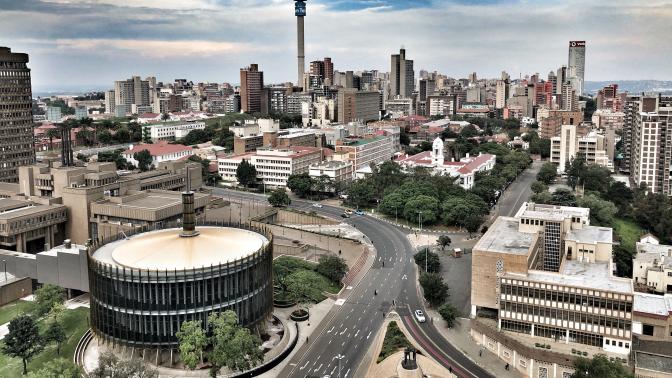
Photo by Clodagh Da Paixao
Spatial inequality remains a defining characteristic of the settlement pattern of Johannesburg. The location and concentration of jobs does not match that of where people live. This job-housing mismatch significantly contributes to inequality in the city as- for many residents- access to economic opportunities is stifled by costly and distant commuting.
The Spatial Development Framework thus seeks to address five major issues in Johannesburg’s spatial and social landscape:
- Increasing pressure on the natural environment and green infrastructure.
- Urban sprawl and fragmentation.
- Spatial inequalities and the job-housing mismatch.
- Exclusion and disconnection emanating from different areas.
Download the Spatial Development Framework to know more about the topic.