

India
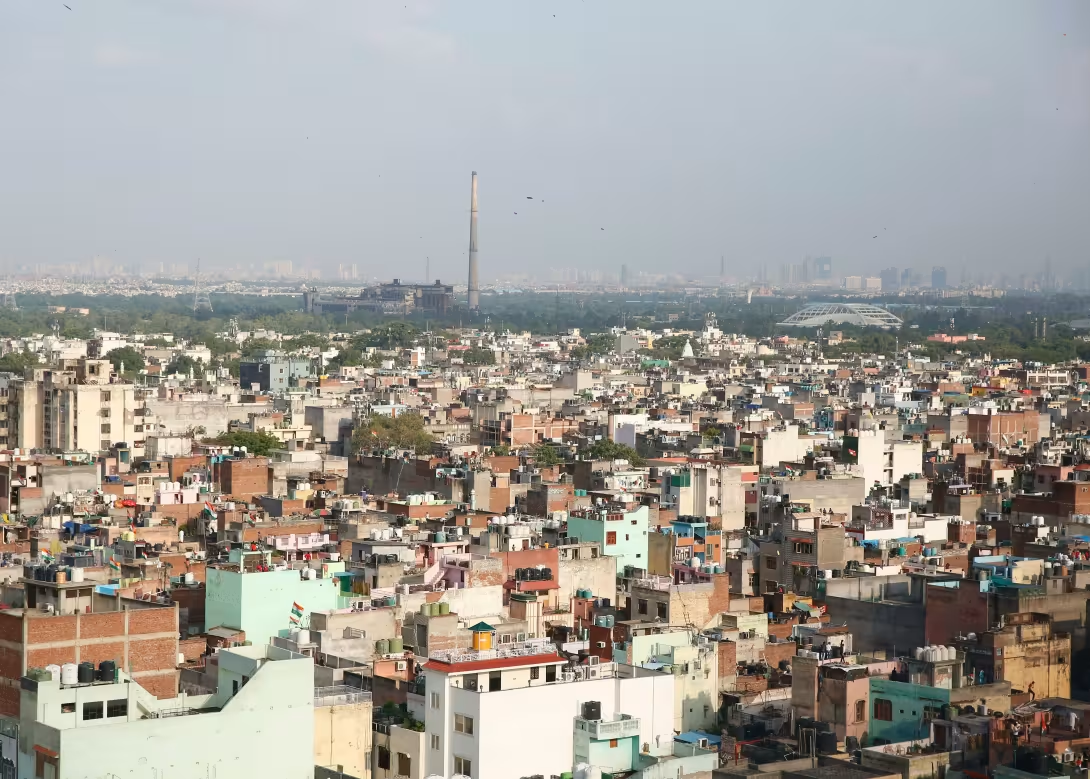
Photo by Hakan Nural / Unsplash
India has been a central partner in the Global Environment Facility’s Sustainable Cities Program, participating in both GEF-6 and GEF-7 UrbanShift to advance integrated, climate-responsive urban transformation. As one of the fastest-urbanizing countries in the world, India faces immense challenges—including rapid population growth, rising emissions, informal settlement expansion, mobility pressures, and increasing vulnerability to climate impacts. Through GEF-6, cities such as Jaipur, Bhopal, Mysore, Guntur, and Vijayawada demonstrated innovative approaches to waste-to-energy, clean mobility, resilient infrastructure, and data-driven urban planning, helping shape national dialogues on sustainable development. Under GEF-7 UrbanShift, Indian cities including Chennai, Pune, Surat, Agra, and Puducherry are scaling nature-based solutions, low-carbon mobility, coastal resilience strategies, and inclusive planning models, in partnership with UNEP, ADB, NIUA, and city governments. India’s multi-cycle engagement reflects its strong commitment to creating greener, more resilient, and more equitable cities while offering valuable lessons and replicable models for the global GEF and GPSC networks.
Theme