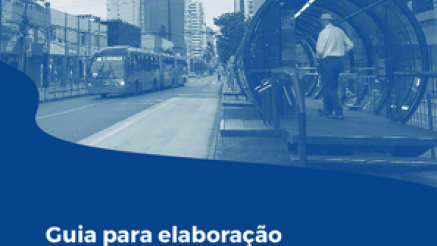


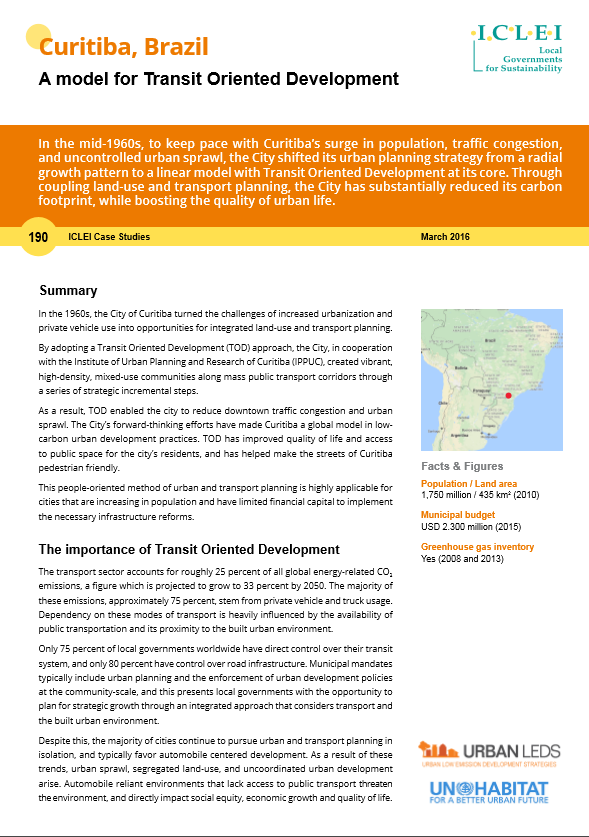
In the mid-1960s, to keep pace with Curitiba’s surge in population, traffic congestion, and uncontrolled urban sprawl, the City shifted its urban planning strategy from a radial growth pattern to a linear model with Transit Oriented Development at its core. This study depicts how TOD enabled Curitiba to reduce downtown traffic congestion and urban sprawl, and improve quality of life and access to public space for the residents. The City’s forward-thinking efforts have made Curitiba a global model in low carbon urban development practices. This people-oriented method of urban and transport planning is highly applicable for cities that are increasing in population and have limited financial capital to implement the necessary infrastructure reforms.