Curitiba

AREA:
435,036 km² (167869 sq mi)
POPULATION:
1,773,718
Brazil

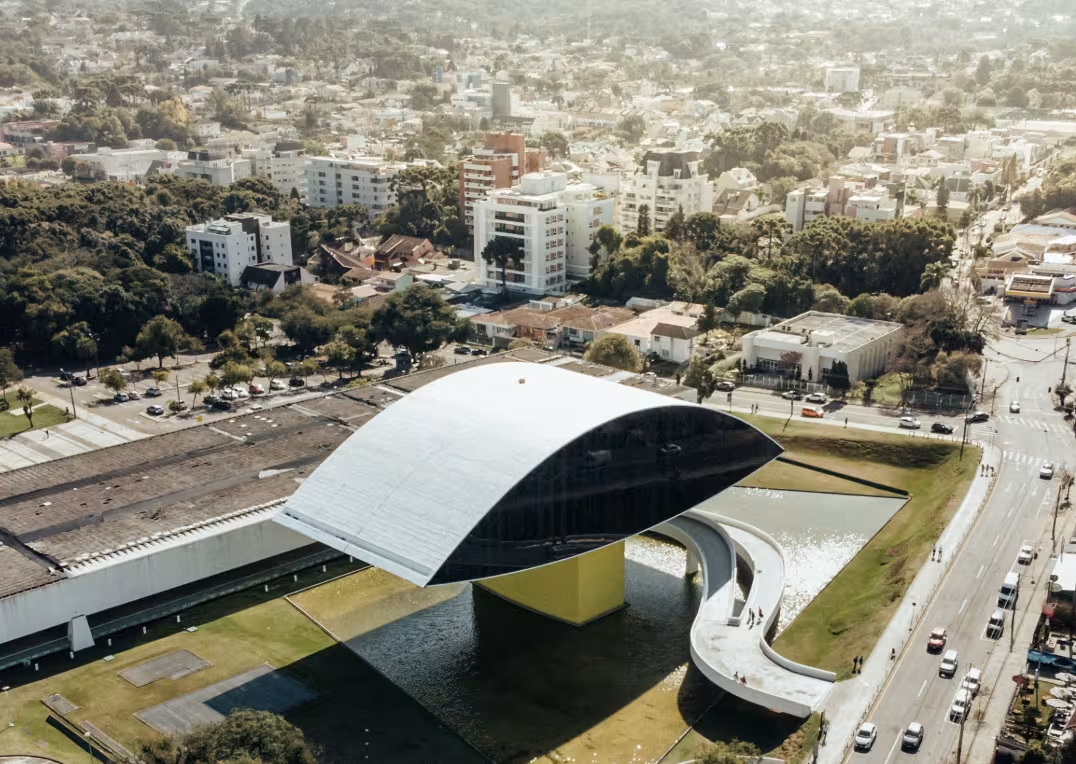
Curitiba, internationally recognized for its pioneering approach to urban planning and sustainable mobility, is an active member of the Urban Nature Network and a participant in the GPSC Cities4Biodiversity (C4B) initiative. As one of Brazil’s most innovative cities in integrating nature into urban design, Curitiba has long championed the use of green corridors, parks, and floodplain management to enhance resilience and biodiversity. Through its participation in the C4B Deep-Dive held in Paris, the city shared experiences on urban nature restoration, ecosystem services, and community engagement. Curitiba continues to demonstrate how nature-based planning and inclusive governance can create healthier, more adaptive, and climate-resilient urban environments across Latin America.
Recent Initiatives

Transit-Oriented Development

Transit-Oriented Development integrates transport planning, land use, and urban design to create compact, connected, and livable cities.

Municipal PPP

Municipal Public-Private Partnerships are long-term collaborations between local governments and private entities to deliver infrastructure and public services.

Gender and Cities

Women and girls face disproportionate climate impacts in cities, making gender equality essential to achieving resilient, inclusive urban development.
Related Content

Transit-Oriented Development Implementation Resources and Tools (Portuguese) The Transit-Oriented Development (TOD) Toolkit provides a comprehensive set of resources to support public officials, practitioners, and urban stakeholders throughout all phases of the TOD process
Knowledge Product

A model for Transit Oriented Development: Curitiba, Brazil In the mid-1960s, to keep pace with Curitiba’s surge in population, traffic congestion, and uncontrolled urban sprawl, the City shifted its urban planning strategy from a radial growth pattern to a…
Knowledge Product