

Transit-Oriented Development Implementation Resources and Tools - 2nd Edition
31 DECEMBER 2020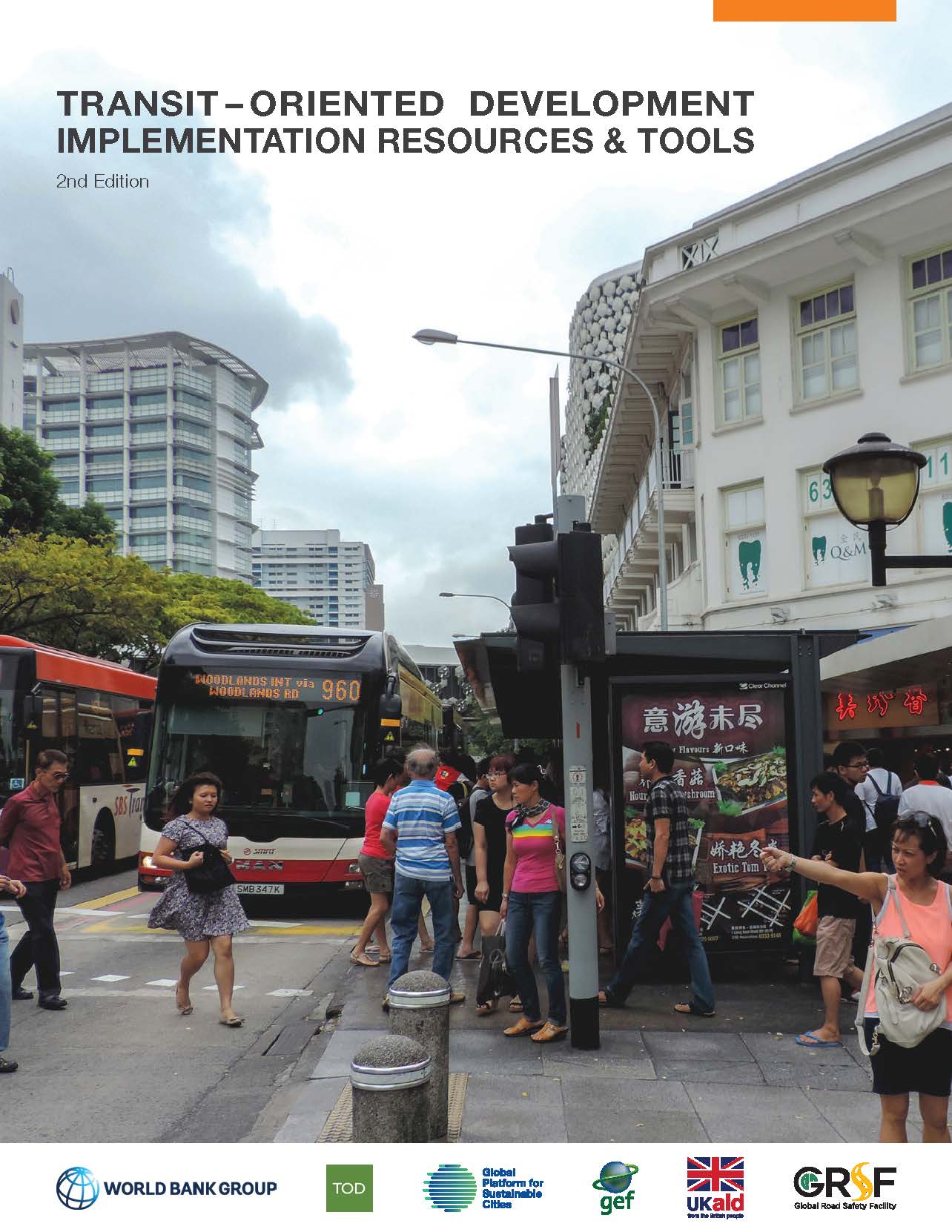
This toolkit provides a compendium of resources for Transit-Oriented Development stakeholders to navigate each phase of the TOD process: Assessing, Enabling, Planning and Design, Financing, and Implementing. It includes how-to guides, analytical tools, communication tools, resources, case studies and template terms of reference for each phase. The latest addition fully embeds road safety consideration at all steps of the process.
Transit-oriented development, commonly known as TOD, is a planning and design strategy that focuses on creating urban development patterns which facilitate the use of public transit, walking and cycling, as primary modes of transport and which supports vibrant, diverse and livable communities. This is achieved by concentrating urban densities, communities and activities within a 5-10 minute walking distance from mass rapid transit stations (both bus and rail-based), developing quality urban space and providing convenient and efficient access to a diverse mix of land uses.