


Cities4Biodiversity

External link

About C4B

C4B aims to develop and support a network of cities to incorporate green and climate solutions into planning and specific project design and implementation and forge political ambitions and commitments. C4B was officially launched at a high-level event Bringing Nature to Cities. Pathways to Integrated Urban Solutions to Climate Change and Biodiversity in September 2021 as a collaborative initiative of the World Bank in cooperation with partner organizations. C4B provides support to national and local governments in the following areas:  ​

  • Planning for “green connectivity” for a network of green urban infrastructure
  • Forging integrated solutions to biodiversity loss and climate change
  • Integrating ecosystem services into land-use planning
  • Leveraging nature-based solutions for urban investment
  • Testing financial models to invest in nature.


C4B’s modality of support will be

  • Deep-dive learning and knowledge sharing opportunities; and
  • Targeted technical support to participating cities.


C4B work is spearheaded by the Global Platform for Sustainable Cities (GPSC) and the Global Program on Nature-Based Solutions for Climate Resilience, both managed by the World Bank’s Urban, Disaster Risk Management, Resilience and Land Global Practice (GPURL), in collaboration with the partner organizations.


C4B Cities

C4B participating cities include both cities from developing countries and those from developed countries. Priority will be given to the cities and local governments with ongoing, relevant projects and initiatives, especially those that have made ambitious commitments and goals to enhance the integrity of ecosystems and their resilience to climate change, thereby promoting nature-positive and carbon-neutral cities.

World Bank – Urban Development: Urban, Disaster Risk Management, Resilience and Land Global Practice (GPURL)

The World Bank’s work in urban development aims to build sustainable cities and communities by helping them meet the critical demands of urbanization through integrated approaches. Key strategic priorities include building climate-smart cities and enhancing planning system and local capacity to better design, plan, and manage urban environments to promote green, resilient, and inclusive cities. To this end, the World Bank’s urban teams support cities to build infrastructure resilience, mobilize capital, and finance at upstream strategy and analysis.
 

Global Platform for Sustainable Cities (GPSC)

World Bank’s Global Platform for Sustainable Cities (GPSC) is a partnership and knowledge platform that promotes integrated solutions and cutting-edge support for cities seeking to improve urban sustainability and build resilience. The platform acts as a convening space of knowledge creation and capacity-building for sustainable urban development, with a focus on integrated urban planning, financing, and metrics. Its broad network includes cities around the world, MDBs, and UN organizations, as well as a wide range of institutions and think tanks across the globe.

GPSC fosters knowledge sharing through global, regional, and working group meetings, bringing together experts and shareholders to exchange ideas, and also by developing analytical works. Recently, it has carried out extensive work focusing on integrated solutions to biodiversity loss and climate change. Its 11-part webinar series “Bringing Nature to Cities” convened more than a thousand participants across 90 countries.
Partners

Theme

Keywords

Countries

Cities

Related content

Ending Global Sprawl: Urban Standards for Sustainable and Resilient Development Planning
The health and wellbeing of humankind will depend on the kind of cities we build in the next two generations. They will provide the scaffolding for our social, economic and environmental future. In
Knowledge Product

A Catalogue of Nature-Based Solutions for Urban Resilience Nature
Cities worldwide are facing resilience challenges as climate risks interact with urbanization, loss of biodiversity and ecosystem services, poverty, and rising socioeconomic inequality. Extreme
Knowledge Product

Washington, DC – a Living Lab for Sustainability and Innovation
Washington, DC is a compact city, encompassing just under 70 square miles and nearly 700,000 residents. In the wake of an urban regeneration that has transformed the physical form as well as the city
Knowledge Product

The Urban Nature Indexes Nature
The IUCN Urban Alliance, a broad coalition of IUCN constituents concerned with the urban dimensions of nature conservation, has unveiled a new knowledge product for measuring the ecological
Knowledge Product

The Urban Butterfly Effect
This is a policy brief with recommendations for national governments to accelerate urban efforts to help them achieve the Global Biodiversity Framework (GBF) 2030 Action Targets. This report is a
Knowledge Product

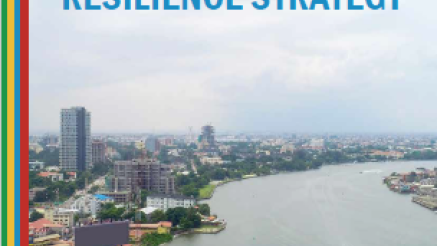
Lagos Resilience Strategy Climate
The Lagos Resilience Strategy is the State’s first urban resilience strategy document and it articulates an integrated approach to addressing the shocks and stresses the city experiences or might
Knowledge Product

Madrid360 Carbon Neutrality Roadmap by 2050 Nature
The Madrid 360 Environmental Sustainability Strategy, presented in September 2019, already pointed out in its introduction that “the compelling need to curb climate change led the European Union to
Knowledge Product

Cities and Nature: Planning for the Future
In preparation for the 15th Conference of Parties (COP15) of the Convention on Biological Diversity (CBD) to adopt the Global Biodiversity Framework, UN-Habitat has prepared a white paper Cities and
Knowledge Product

Urban Green Infrastructure I: Challenges, Opportunities and Good Practices (Spanish) Nature
This publication is part of a series of three papers exploring the different aspects of urban green infrastructure solutions. This first part explores Urban Green Infrastructure and Nature-Based
Knowledge Product

Integrating Climate Adaptation: a Toolkit for Urban Planners and Adaptation Practitioners Climate
The toolkit on Integrating Climate Adaptation is aimed at both urban planning and climate adaptation specialists working for cities. This toolkit was developed with the goal of facilitating the
Knowledge Product

Greening Africa's Cities : Enhancing the Relationship between Urbanization, Environmental Assets, and Ecosystem Services Nature
Africa is urbanizing late but fast. This brings many benefits but, as this report shows: thus far, urbanization in Africa, unique in a number of respects, is having deleterious and largely unchecked
Knowledge Product

Summary - Towards an IUCN Nature-Positive Approach: a Working Paper Nature
To deliver a nature-positive future the world needs to be able to measure progress towards global goals, but currently lacks the tools to do so. IUCN is developing a quantitative methodology to
Knowledge Product

2021 Sustainable LA Grand Challenge Sustainability Report Card for Los Angeles County Ecosystem Health Data
This 2021 Report Card on Ecosystem Health provides an in-depth look at the region’s efforts in moving toward a more resilient environment and community for people and native wildlife. A healthy and
Knowledge Product

Primer for Cool Cities: Reducing Excessive Urban Heat – With a Focus on Passive Measures Nature
Cities are getting hotter as a result of growing urbanization and global climate change. The negative impacts of temperature increases are significant and touch nearly every aspect of urban life
Knowledge Product

Stepping Up on Biodiversity: What the Kunming‑Montreal Global Biodiversity Framework means for responsible investors Nature
In the face of unprecedented biodiversity loss, 196 countries adopted in December 2022 the Kunming-Montreal Global Biodiversity Framework (GBF) providing a global framework to halt and reverse nature
Knowledge Product

Valuing the Benefit of Nature-Based Solutions for Integrated Urban Flood Management in China (Available in English and Chinese) Nature
Such solutions have the potential to integrate natural habitats, processes, and services as part of a coherent and holistic approach to water management, particularly in the urban context. They can
Knowledge Product

Nature-Based Solutions: State of the Art in EU-Funded Projects Nature
This document summarises outcomes from the Commission individual expert reports delivered through its ‘Valorisation of NBS Projects’ initiative. EU research and innovation projects were scanned for
Knowledge Product

Climate Action Planning City Academy Climate
The City Academy was co-organized by the GPSC Resource Team, the consortium made up of C40, ICLEI and WRI. This academy had the following objectives for participants:
 
Understanding that climate action
Knowledge Product

Biodiversity in Cities - Technical Guide
In order to respond to the challenges and growing demand of counterparts, partners and populations to better integrate nature in cities, AFD Group has developed this technical guide "Biodiversity in
Knowledge Product

Urban Nature and Biodiversity for Cities. Policy Brief Nature
One important way for urban leaders to rise to today’s challenges is to bring biodiversity and nature into urban design through urban ecological planning. Such planning recognizes that cities depend
Knowledge Product

The Value of Using Notation Keys in City Scale Greenhouse Gas Emission Inventories: Learning From Absent Data Data
National, regional and local governments around the world are taking steps to tackle climate change. In order to do so they need to track and report their climate data. However, in some instances
Knowledge Product

Banking on nature: What the Kunming-Montreal Global Biodiversity Framework means for responsible banks Nature
As part of a series of publications to help financial institutions understand the relevance and implications of the Kunming-Montreal Global Biodiversity Framework (GBF), this briefing provides banks a
Knowledge Product

C4B 1st Deep-Dive Learning: Greening Cities - Summary Report
Cities4Biodiversity (C4B) participants convened in April 2022 to explore the first of a series of themes critical to the purpose of C4B – developing and supporting a network of cities forging
Knowledge Product

Biodiversity and Health in the Urban Environment Nature
Biodiversity underpins urban ecosystem functions that are essential for human health and well-being. Understanding how biodiversity relates to human health is a developing frontier for science, policy
Knowledge Product

Green Infrastructure Design for Transport Projects: A Road Map to Protecting Asia's Wildlife Biodiversity Nature
This report discusses the impacts of transport projects on wildlife and biodiversity in Asia, and how to address them by integrating road ecology principles and green infrastructure to balance
Knowledge Product

The benefits of citizen science and nature-noticing activities for well-being, nature connectedness and pro-nature conservation behaviors Nature
The current biodiversity crisis, extinction of experience of nature and rising concern about people's well-being and mental health require us to understand the benefits of activities supporting people
Knowledge Product

Urban Green Infrastructure II: Implementing and Monitoring (Spanish) Nature

This publication is part of a series of three papers exploring the different aspects of urban green infrastructure solutions. This second part provides technical information on several types of urban

Knowledge Product

Mapping and Assessment of Ecosystems and their Services: An EU ecosystem assessment Nature
This report presents an ecosystem assessment covering the total land area of the EU as well as the EU marine regions. The assessment is carried out by Joint Research Centre, European Environment
Knowledge Product

Natural Asset and Biodiversity Valuation in Cities Nature
Cities are increasingly recognizing the role of the natural environment in shaping healthy and livable places that enhance human capital. With urban populations expected to grow by 2.4 billion people
Knowledge Product