

2021 Sustainable LA Grand Challenge Sustainability Report Card for Los Angeles County Ecosystem Health
July 11, 2021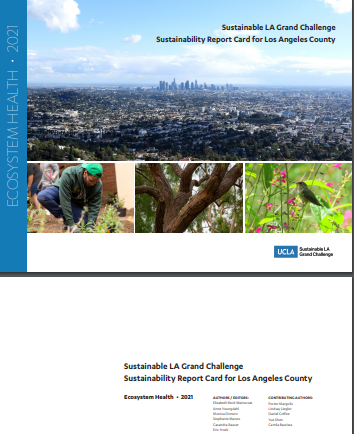
This 2021 Report Card on Ecosystem Health provides an in-depth look at the region’s efforts in moving toward a more resilient environment and community for people and native wildlife. A healthy and improved ecosystem requires protecting and restoring high-quality habitats and native biodiversity; reducing ecosystem threats like wildfire and invasive species; and ensuring every Angeleno has access to nature and its benefits such as clean water, shade, and respite through policy solutions that address the region’s inequities. To evaluate the region’s ecosystem health, 18 indicators were assessed across four categories. Many of these indicators are new areas of assessment for the Report Card and will provide a more comprehensive picture of current conditions compared to our 2015 Report Card.1 Grades were assigned in each category based on data availability and accuracy, compliance with regional policy targets where applicable, and historical improvements. This year’s grades range from C/ Incomplete to B, and although there has been great progress in some areas, other areas still require significant improvement to raise the county’s C+ average.