

Valuing the Benefit of Nature-Based Solutions for Integrated Urban Flood Management in China
16 OCTOBER 2021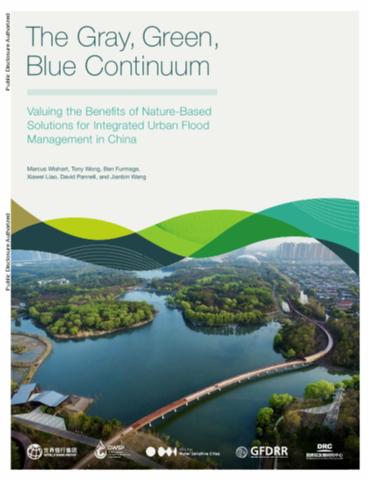
Such solutions have the potential to integrate natural habitats, processes, and services as part of a coherent and holistic approach to water management, particularly in the urban context. They can provide multiple functions beyond conventional flood mitigation, generating a range of benefits by restoring and conserving natural capital, improving the live ability of urban spaces, increasing resilience, and contributing to more sustainable outcomes. In doing so, they can enhance overall water security by improving water availability and water quality while simultaneously reducing water-related risks and generating additional social, economic, and environmental co-benefits.
Achieving these outcomes requires hybrid urban infrastructure city-wide. Such infrastructure optimizes a mix of blue, green, and gray corridors that can integrate NbS into the built urban form at a range of scales and in varying proportions. While the design and implementation of these hybrid assets are relatively well considered, their implementation at scale has been limited. This is due in part to the challenges in realizing the values associated with the full range of market and non-market benefits and comprehending the distribution of these among diverse beneficiaries. This situation makes it difficult to secure sustainable revenue streams and to internalize future returns that can be aggregated to leverage sufficient financing. As a result, improved approaches are required to identify the benefits derived from NbS, evaluate the value of these benefits and to identify the range of potential beneficiaries, to provide a framework that can facilitate co-investment in hybrid infrastructure and ultimately suitable financing models.