

The built environment sector is critical to achieving a nature-positive future, as it is responsible for nearly 30% of biodiversity loss globally, 50% of global raw materials extraction, 40% of waste streams, and 40% of CO2 emissions.
By 2025, the construction industry is predicted to generate 2.2 billion tons of waste annually. Of this, approximately 77 million tonnes (35%) end up in landfills each year.
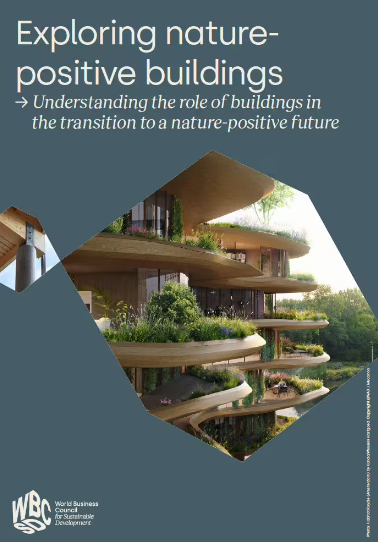
WBCSD, in collaboration with its members and supported by global sustainable development consultancy Arup, has launched this research on how to measure and monitor the nature impacts of buildings across their whole lifecycle. Exploring Nature Positive Buildings shows real estate developers, building designers, and others in the built environment sector the first steps towards assessing the ‘whole-life nature impacts’ of buildings.
The report sets out four key messages for real estate developers and building designers to reduce the impact of buildings on nature:
- Think global – It’s vital to acknowledge the significant impacts that occur away from the site associated with the extraction and processing of construction materials.
- Think whole life cycle – Embodied nature impacts across the whole life of the building must be considered; alongside potential nature impacts that occur on-site.
- Take immediate action – There are clear actions that built environment professionals can take now – like using circular economy principles to reduce the extraction of raw materials.
- Engage with the value chain – The nature impacts of buildings are not yet fully understood, so it is important the sector works together to change standards, advocate for changes to policy, and accelerate change.