

The Global Platform for Sustainable Cities (GPSC)

GPSC provides access to cutting-edge tools, data, and expertise, promoting an integrated approach to urban planning, design, and financing.
 

The Global Platform for Sustainable Cities (GPSC) is a World Bank–led partnership that helps cities turn sustainability into opportunity. By connecting cities with knowledge, partners, and practical tools, the GPSC supports urban leaders in designing and implementing solutions that reduce emissions, protect biodiversity, create jobs and economic opportunities, strengthen resilience to climate and urban risks, and improve quality of life for residents.


The World Bank is the lead agency of the Global Environment Facility (GEF) Sustainable Integrated Cities Program (SCIP), which combines a global knowledge platform with city-level projects to accelerate sustainable urban transformation. Download the brochure

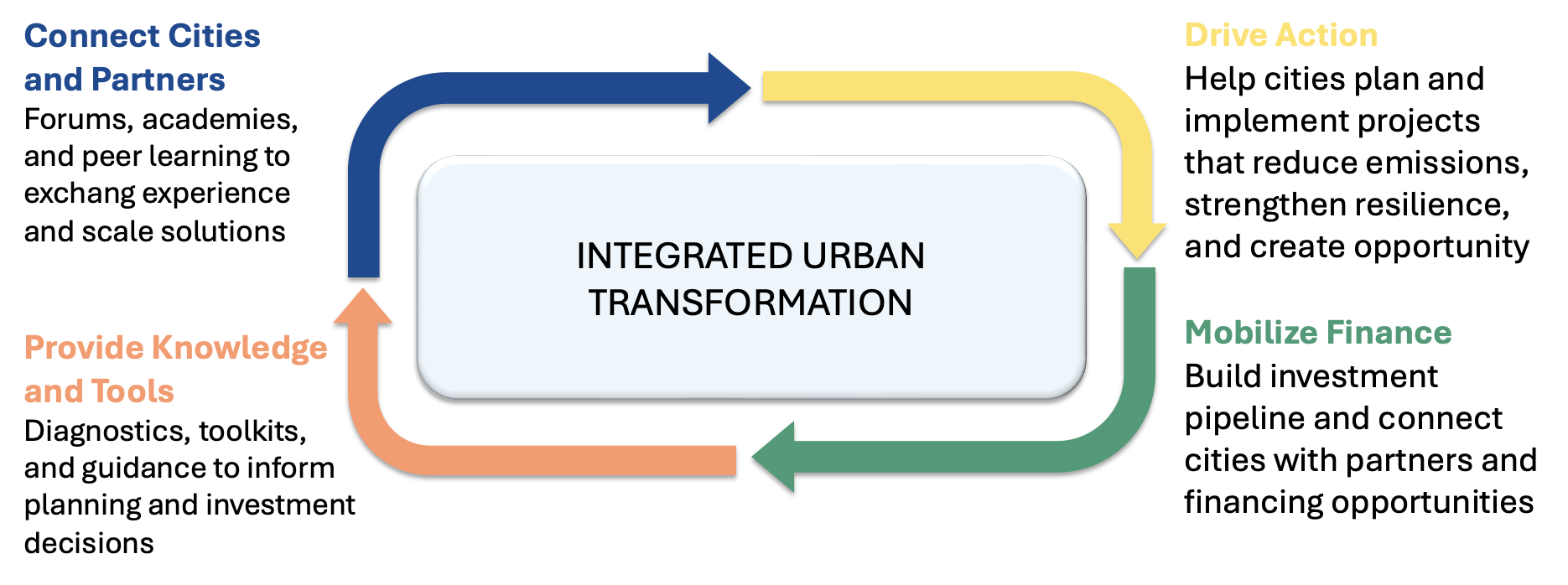
The GPSC operates through a dual structure that links global knowledge with local implementation. At the global level, it serves as a platform for peer learning, technical exchange, and collaboration among cities, partners, and experts. At the city level, projects implemented by GEF agencies translate this knowledge into tangible actions, supporting integrated solutions to climate, biodiversity, and resilience challenges.
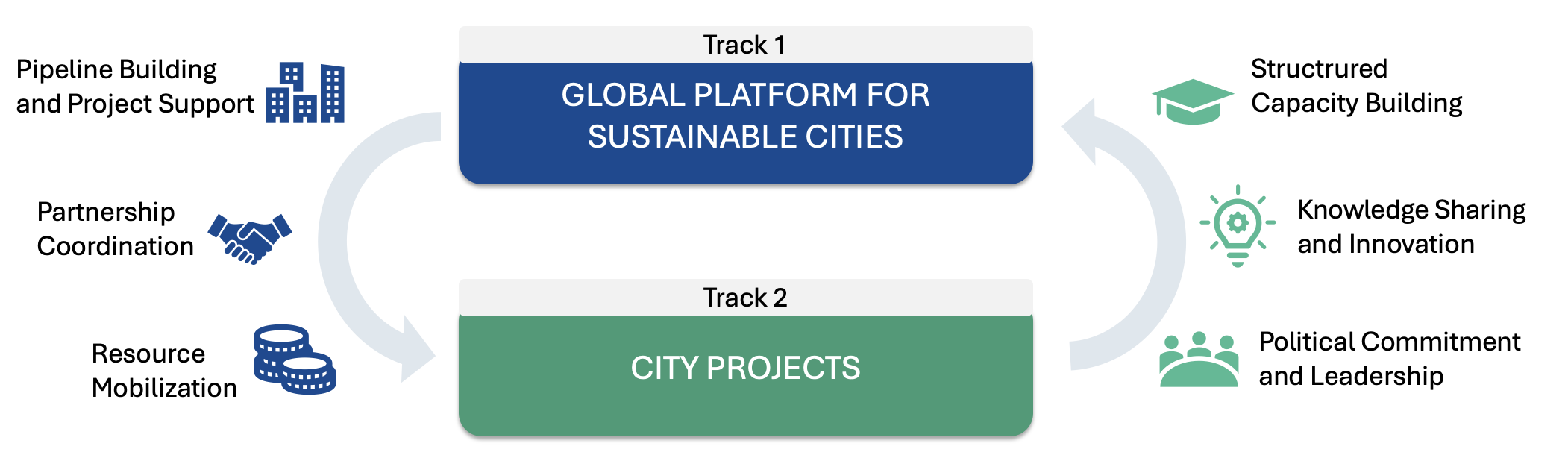
 

The GPSC supports cities through four core areas of work


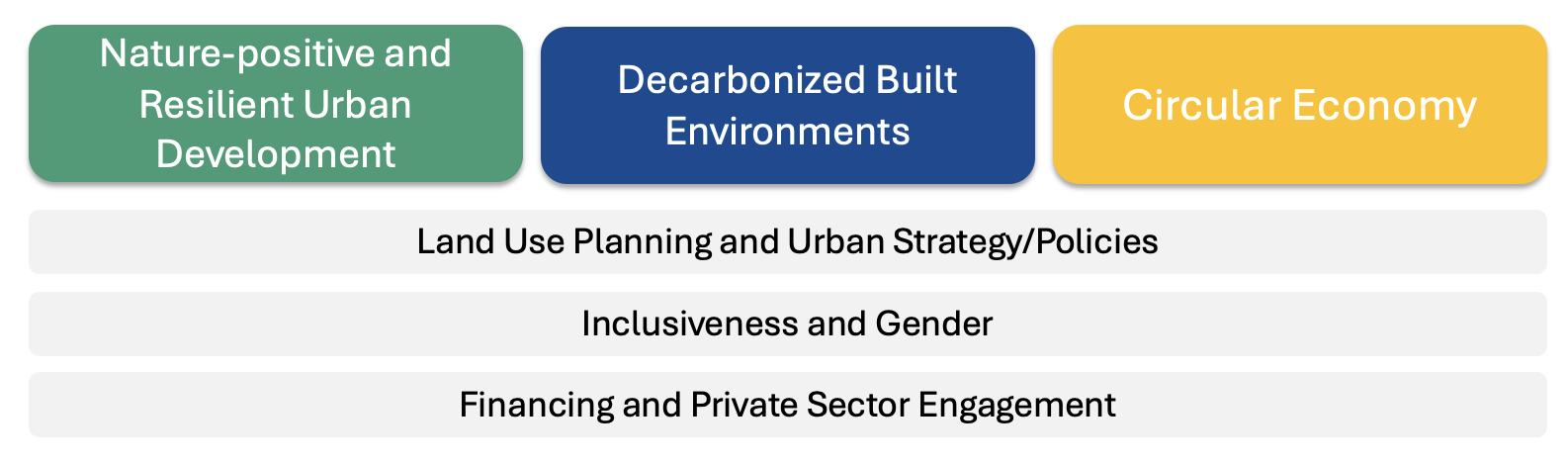
The GPSC promotes integrated urban solutions that address interconnected challenges across systems. It advances nature-positive and climate-resilient development, supports the decarbonization of the built environment, and promotes circular economy approaches. These priorities are reinforced by cross-cutting efforts in integrated planning, inclusive and gender-responsive development, and private sector engagement to mobilize sustainable investment.



GPSC Themes

Circular

Circular cities reduce waste and regenerate resources by rethinking production, consumption, and material flows.

Climate

Cities drive climate change but also solutions; integrating climate action into urban planning boosts resilience and creates inclusive green growth.

Data

Urban data supports evidence‑based planning, combining geospatial analysis, open data, and performance tracking to design transparent, accountable sustainability actions.

Finance

Innovative finance mobilizes public and private capital through blended instruments and PPP frameworks to fund climate‑smart, nature‑based, resilient urban development.

Inclusivity

Inclusive urban transformation ensures that all residents—especially women, youth, and vulnerable groups—benefit from sustainable growth.

Mobility

Sustainable mobility links people, jobs, and opportunities through low-carbon, accessible, and equitable transport systems.

Nature

Nature‑positive cities restore ecosystems through green corridors, forests, wetlands, and parks, using biodiversity and nature‑based solutions, boosting resilience and well‑being.

Planning

Planning aligns land use, infrastructure, and environmental systems, integrating resilience, biodiversity, and inclusivity to guide efficient, equitable, low‑carbon urban growth.

Tourism

Sustainable tourism integrated into urban planning protects ecosystems, activates public spaces, strengthens local economies, and supports low‑impact, resource‑efficient city development.