

From Silos to Systems for Livable Cities: Embracing nature and biodiversity in city planning and investment prioritization
19 March 2026 /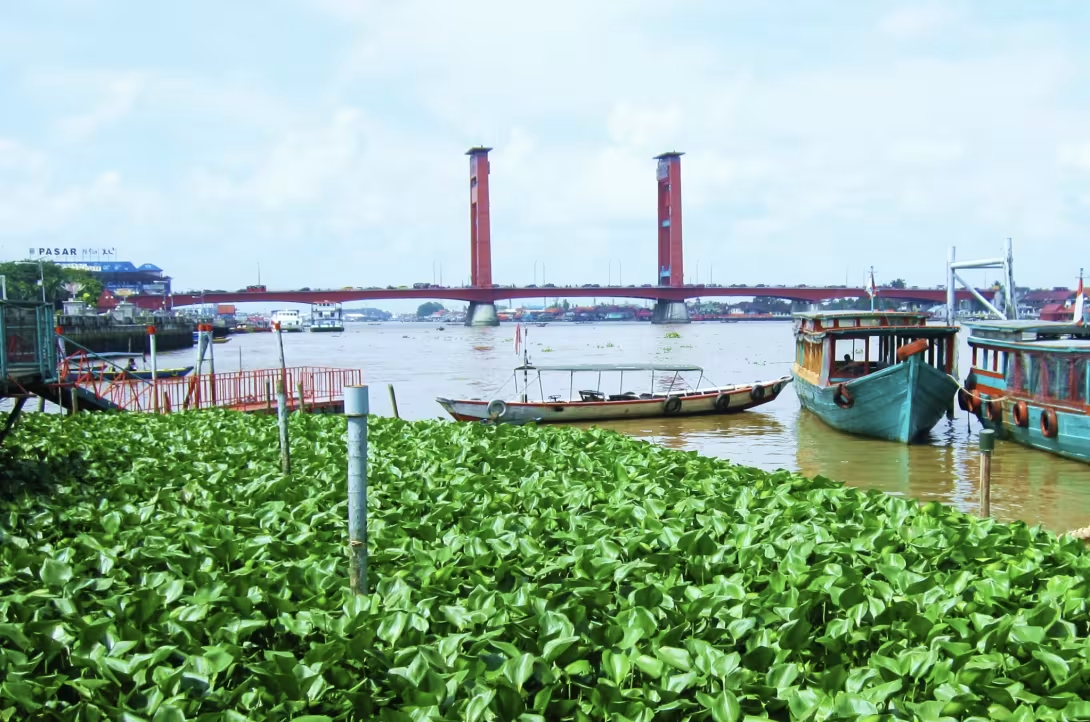
Today, more than 162 million people in Indonesia live in cities, more than 10 times the number when the country became independent in 1945.
Rapid urbanization has put intense pressure on cities across the tropical archipelago, resulting in urban sprawl, unsafe living conditions, and environmental challenges including strains on nature. The decisions made about the future of Indonesian cities, therefore, are as important for people as they are for nature and biodiversity. Jakarta, for example, is home to over 10.5 million people, who live alongside more than 300 hectares of mangroves and diverse marine ecosystems. Bitung City on the coast of North Sulawesi is the home of endemic micro species in the Lembeh Strait. Palembang, in Sumatra, is bisected by the Musi River and hosts majestic forests and natural reserves that are home to iconic bird species. Because many of these cities are located alongside coasts, they are also highly vulnerable to natural disasters and hazards from pollution. An estimated 76 million Indonesians – 27 percent of the total population – live in high-risk flood zones, exacerbating poverty and vulnerability. Weak waste management systems in urban areas have also polluted Indonesian waters – as much as 600,000 tons of untreated waste enter the ocean every year. To address these challenges, and create new opportunities for cities across Indonesia, the Global Environment Facility and World Bank have joined forces under the GEF-7 Sustainable Cities Impact Program (SCIP) to provide targeted support to the Indonesian government and city governments to thrive for sustainable urban development using multi-sectoral, integrated approaches with a focus on building livable cities for the long-term.
These integrated approaches reflect a growing realization that improving urban development is good not only for the well-being of people, but also for the health of nature. Improving decision-making around land use while improving public transport systems can improve access to jobs, connectivity and recreation, while at the same time improving air quality. Improving waste and wastewater management systems can help public health, prevent water pollution, reduce methane emissions from landfills, and protect marine ecosystems all-in-one. These purposefully multi-sectoral approaches to urban planning are making a difference across the country and informing new decision-making in capital investment prioritization. In collaboration with the Indonesian Ministry of National Development Planning (Bappenas), the cities of Balikpapan, Bitung, Jakarta, Palembang, and Semarang are advancing this approach through three strands under SCIP.
The first strand of this work is efforts to integrate nature and biodiversity considerations into cities’ existing spatial development planning processes. Previously, these topics were handled in silos by different municipal agencies and with separate planning documents. Now, they will be integrated into a unified planning system, with specific districts or corridors identified in each city where action could improve climate, biodiversity, as well as urban development goals. The second strand relates to training in the preparation of investment grade projects, to support access to infrastructure finance. Building on the foundation of district- and corridor-based planning, GEF and World Bank support is assisting Indonesian cities to prepare bankable projects related to waste and wastewater management, water supply, stormwater management, sustainable energy, mobility, and urban biodiversity and sustainable landscape, to support additional investment.
One such example is the Musi Green Heritage Corridor in the City of Palembang. Having witnessed the formation of the revered Sriwijaya Kingdom in the 7th century, the Musi River not only serves as a strategic ecological corridor to Palembang, but it also holds strong socio-cultural weight flowing through its stream. In close consultation with the Palembang City Government, this project aims to develop a series of multi-function green open spaces along the riverbank, addressing degradation of river ecosystems and biodiversity, land subsidence, and soil and air pollution, while also providing space to showcase Palembang’s rich historical and cultural identity.
The third strand is to support local governments participating in SCIP, which have limited fiscal space, to explore new innovative financing modalities to help narrow their infrastructure investment gaps. The Deputy Minister for Regional Development, Mr. Medrilzam emphasized the urgency for such activities:
“Environmental issues have become a national priority in realizing our development objectives. Without addressing these externalities, economic development targets of Golden Indonesia 2045 will not be achieved. GEF-SCIP should lead the pathway to show to the world what is an integrated urban development approach for Indonesia.”