

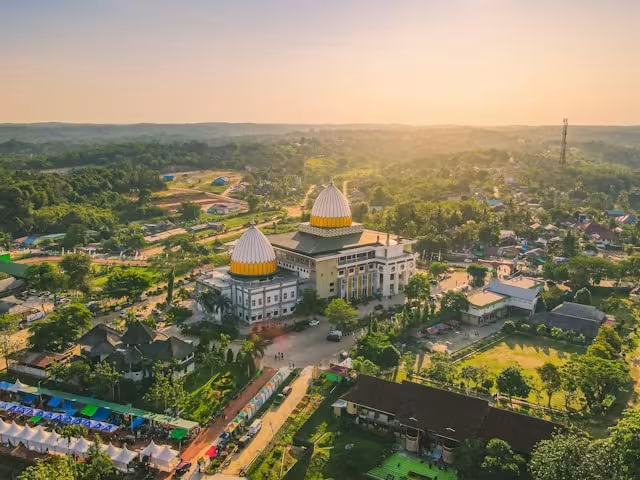
Balikpapan, the capital of East Kalimantan province on the island of Borneo, participates in the GEF-7 UrbanShift program to advance a just transition from a fossil-fuel-based economy toward a more sustainable and diversified urban model. A major center for oil, gas, and palm oil production, Balikpapan faces mounting challenges from deforestation, forest fires, and pollution that threaten both biodiversity and local livelihoods. Through UrbanShift, the city is working to strengthen integrated spatial planning, restore ecosystems, and expand renewable energy investments to reduce carbon emissions and environmental degradation. The program also supports improved land-use management and waste systems, as well as inclusive planning to address informal settlements and urban inequality. By connecting environmental priorities with economic diversification, Balikpapan is positioning itself as a model for sustainable urban transformation in Indonesia’s resource-dependent regions.