

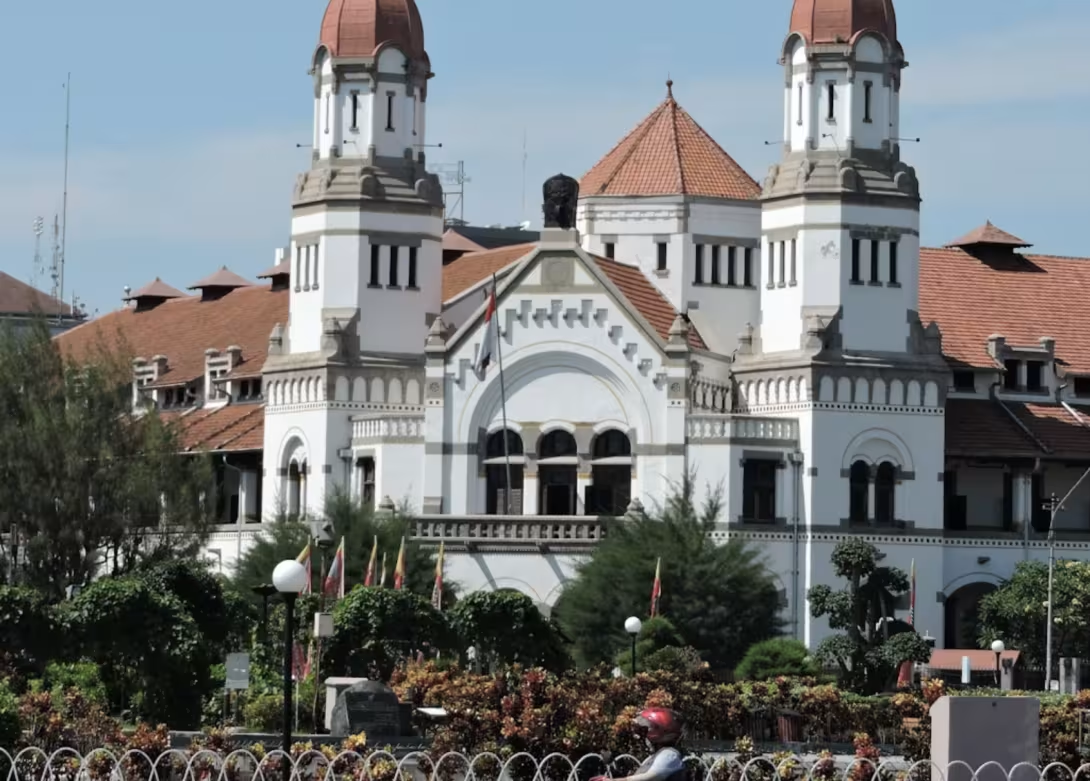
Semarang, the capital of Central Java province, participates in the GEF-7 UrbanShift program to address critical environmental and infrastructure challenges affecting its rapidly growing urban area. With nearly two million inhabitants and a diverse economy spanning industry, logistics, and tourism, Semarang faces major threats from land subsidence caused by groundwater extraction, as well as recurrent flooding, coastal erosion, and landslides. Through UrbanShift, the city is enhancing metropolitan coordination and investing in integrated planning to reduce climate and geological risks. The program promotes sustainable water and waste management, improved transport systems, and the use of nature-based solutions to stabilize slopes and restore degraded ecosystems. By strengthening institutional capacity and introducing innovative tools for climate-resilient planning, Semarang is laying the foundation for greener growth and improved quality of life across Central Java.