

Guatemala Study on Disaster Risk Management of Cultural Heritage: The Case of Antigua Guatemala
16 JUNE 2019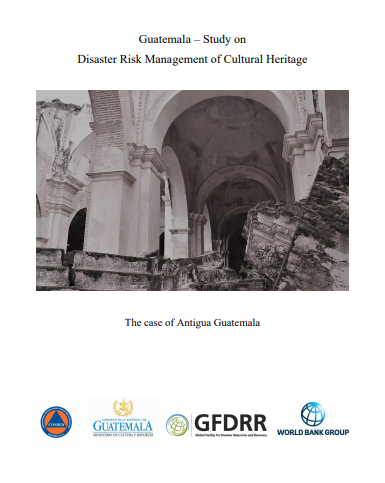
Natural events are recurrent. Geophysical hazards such as earthquakes or volcano eruptions cannot be predicted, but it is known that where they have happened in the past, they will happen again. In the case of hydro-meteorological hazards, frequency and intensity are increased by the action of climate change. Guatemala is located in one of the most hazard prone regions, threatened by earthquakes, volcanic eruptions, landslides, fires, hurricanes, and floods. Additionally, other hazards such as fires usually affect ancient structures, becoming one of the main hazards to specific cultural heritage assets. However, natural hazards only lead to disasters when its effects negatively affect human life, and the consequences depend on the vulnerability of the assets and population exposed to these hazards.
The concept and practice of Disaster Risk Management (DRM), understood as a safe development strategy, has evolved during the last decades from an approach focused almost exclusively on disaster response, towards a broader approach focused on risk understanding, prevention, and reduction, without demeriting the importance of having strong preparation and response systems. However, other priorities generally relegate cultural heritage in the agenda of local and national governments, and disaster risk plans do not include heritage, leaving at risk areas, buildings or other assets of high historical value. In this regard, conducting risk assessments and establishing risk mitigation and emergency preparedness measures is fundamental. In case of emergency the priority is always to save lives, but in a second moment, acting quickly on cultural heritage is essential to preserve legacies that could otherwise be lost forever.