

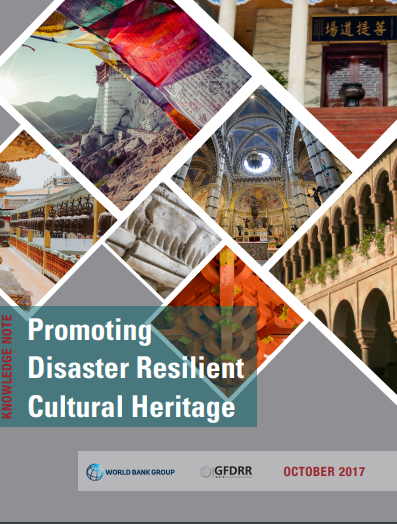
Cultural heritage is vulnerable to the adverse impacts of natural disasters, and climate change is adding to the urgency of addressing this challenge. Countries around the world are employing a variety of measures to safeguard cultural heritage against disaster risks, drawing on relevant conventions, policy frameworks, and guidance. To protect lives, livelihoods, and cultural heritage, it is important to strengthen the resilience of assets at risk and make disaster resilience an intrinsic part of cultural heritage management. This note highlights a number of recommendations that can help policy makers and practitioners further develop DRM practices for more resilient cultural heritage.

Related content
View all
Culture
Resilient Cultural Heritage: Learning from the Japanese Experience
Japan’s cultural heritage (CH) is among the richest in the world, but the country is faced with some of the most difficult challenges in its exposure to hazards. With earthquakes, volcanic eruptions
Culture
The Economics of Uniqueness: Investing in Historic City Cores and Cultural Heritage Assets for Sustainable Development
With rapid urbanization, cities featuring valuable historic cores and heritage assets struggle to modernize without completely losing their uniqueness. The good news is that there is an increasing
Culture
Building Back Stronger: Urban Resilience Through Post-Conflict Reconstruction
Rebuilding cities and towns after protracted conflict is a more common occurrence than many would find acceptable. It is also a policy challenge that can either exacerbate or help alleviate simmering