

Seoul's Experience in Cultural Heritage Sustainable Tourism and Urban Regeneration
19 DECEMBER 2018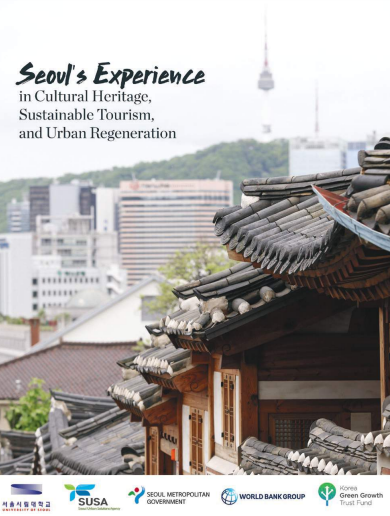
This report details the evolution of Seoul’s efforts since the 1960s to balance all three elements of this critical equation: cultural heritage, sustainable tourism, and urban regeneration. The five case studies in this report provide illustrations of technical and operational best practices, and map out pitfalls and challenges to be avoided. We sincerely hope that readers will find that a keen, balanced understanding of urban development, economic growth, and cultural awareness can be achieved through carefully designed policies and professional management. We also hope this report will assist experts around the world to strengthen planning and implementation and improve the outcomes of cultural heritage preservation, tourism development and urban regeneration to make their own communities more inclusive, resilient, and competitive.