

Urbanshift Annual Report Launch Webinar Reflecting 5 Years of Impact

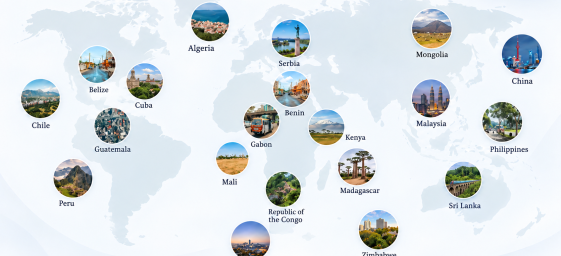
This webinar marks UrbanShift’s final year and spotlights five years of impact around cities shaping a new era of urban sustainability through finance, inclusion, and innovation. As part of the Global Environment Facility’s Sustainable Cities Impact Program under the GEF-7 cycle, UrbanShift has supported 23 cities across 9 countries to implement integrated urban solutions that address climate, biodiversity, pollution, and social challenges. While UrbanShift itself directly engages with this core group of cities, it also contributes to a broader global effort. Across the full Sustainable Cities portfolio—including GEF-6, GEF-7, and GEF-8 cycles—over 90 cities in 33 countries have received GEF support. Collectively, these efforts have mobilized $161 million in GEF funding and $1.93 billion in co-financing.
From restoring wetlands in Kigali to implementing green corridors in Buenos Aires, UrbanShift cities have delivered tangible results. This public webinar celebrated the program’s achievements over the past five years and explore best practices around how to scale up its legacy to shape up urban sustainability. The session also marked the launch of the UrbanShift Annual Report 2024–2025, highlighting key milestones and on-the-ground impact stories from across the network.
A special spotlight was placed on Brazil, featuring voices from Teresina and Florianópolis, and insights from the Ministry of Science, Technology, and Innovation.