


Johannesburg

AREA:
1,645 Km2
POPULATION:
5,782,747 (2022 est.)
South Africa

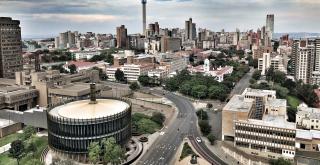
Johannesburg's dense central business district. 

Johannesburg, a key participant in the GEF-6 Global Platform for Sustainable Cities (GPSC), continues to build on its earlier experience under the GEF-8 Sustainable Cities Integrated Program (SCIP). Through the GPSC, the city and its partner municipalities strengthen capacity across large and smaller jurisdictions to advance integrated metropolitan planning. The initiative promotes nature-based solutions, decarbonized and circular infrastructure, and innovative financing mechanisms aligned with municipal planning cycles to accelerate South Africa’s transition toward inclusive, climate-resilient urban growth.
Recent Initiatives

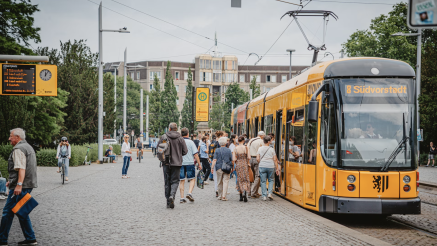
Transit-Oriented Development

What is TOD? Why TOD Matters From Concept to Practice Making TOD Work Explore Resources Transit-Oriented Development (TOD) is an integrated approach to urban planning that aligns transport, land use

Municipal PPP

What is Municipal PPP? Why Municipal PPP Matters Understanding the Context The PPP Project Cycle Municipal PPP Framework Municipal Public-Private Partnerships (PPPs) are long-term collaborations

Gender and Cities

Why Gender Matters Our Approach What We Do Explore Our Resources Featured Resources Gender equality is essential to achieving sustainable, resilient, and inclusive cities. Climate change
Related Content

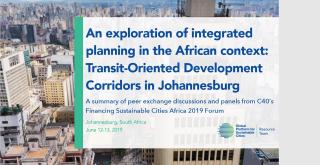
An exploration of integrated planning in the African context: Transit-oriented Development Corridors in Johannesburg The GPSC Resource Team utilized the C40-led FINANCING SUSTAINABLE AFRICAN CITIES FORUM 2019 to host a peer to peer exchange opportunity for the GPSC African Cities, namely Abidjan, Dakar and
Events

Development Contributions City of Johannesburg “Diepsloot Node” - Case study The “Diepsloot Node” is a mixed-income, predominantly residential area located between the City of Johannesburg and the suburbs of Midrand and Centurion (in the City of Tshwane) to the north. The
Knowledge Product