

Rwanda
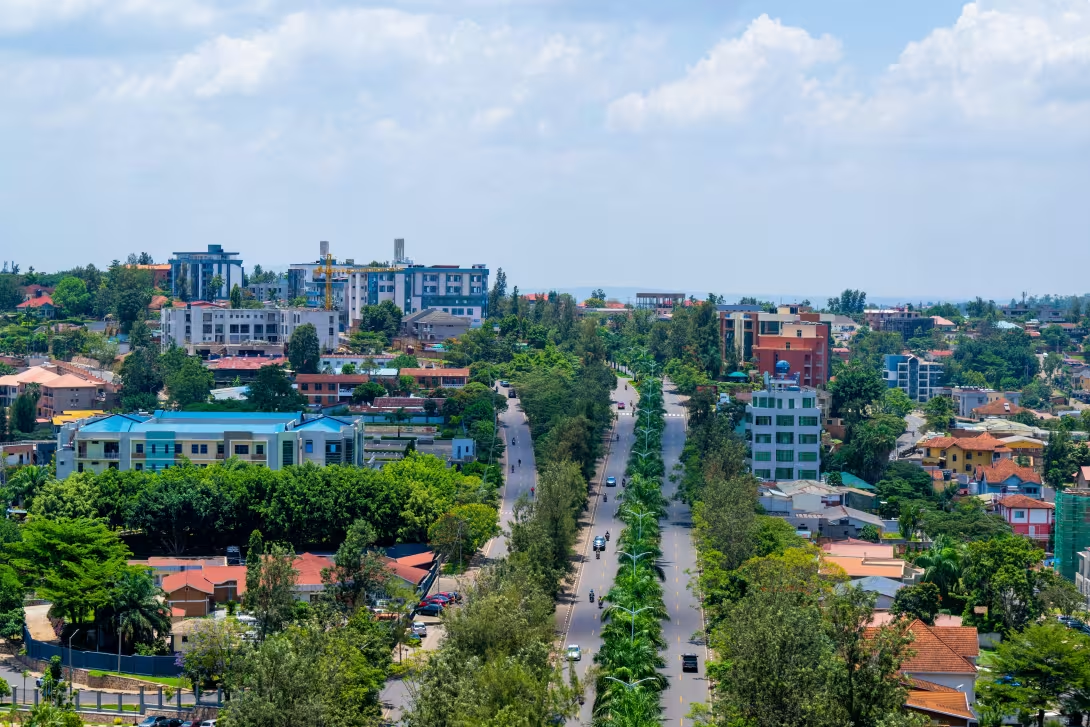
Photo by Faustin Nkurunziza / Pexels
Rwanda participates in the GEF-7 UrbanShift program, advancing integrated, resilient, and low-carbon urban development across a network of rapidly growing secondary cities and the capital, Kigali. As one of Africa’s fastest-developing nations—with rich ecosystems, rising urbanization, and increasing climate pressures—Rwanda faces challenges related to flooding, land degradation, housing demand, and expanding infrastructure needs. Through the Rwanda Urban Development Project (RUDP II), supported by the World Bank, UrbanShift helps Rwanda strengthen city planning, rehabilitate critical wetlands, and implement green–grey solutions to reduce flood and erosion risks. The program also enhances local government capacity and supports data-driven strategies in cities such as Huye, Muhanga, Musanze, Nyagatare, Rubavu, and Rusizi, demonstrating scalable models of integrated service delivery and climate resilience. Rwanda’s engagement provides valuable lessons to the global GEF and GPSC networks on how coordinated planning, ecosystem restoration, and inclusive urban management can transform rapidly urbanizing regions.
Kigali
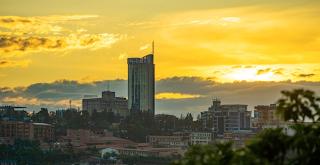
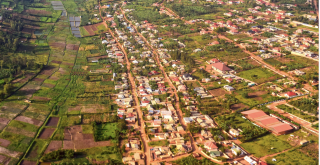
Located in the lush, hilly heart of Rwanda, the capital city, Kigali, is home to 1.63 million people, or approximately 14% of the country's total population. As Rwanda's financial and administrative hub, Kigali accounts for over 40% of the Gross Domestic Product (GDP) and attracts large numbers of rural migrants, resulting in a range of urban challenges: limited infrastructure to serve a growing population, limited green spaces, a decline in natural drainage systems, and a shortfall of safe, affordable housing. Today, 63% of Kigali's residential settlements are considered informal or unplanned.
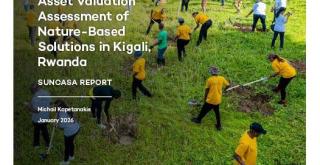
One of RUDP II's interventions in Kigali consists of the rehabilitation of critical wetlands to improve the ecosystem services on which many of the city's residents depend.
Huye
The city of Huye is the main urban center of southern Rwanda and is located along the national highway that connects Kigali to neighboring DRC (Democratic Republic of the Congo). Huye has a population of about 41,000, with a built-up area that has expanded from 1 km2 to 9 km2 in the last three decades.
The Rwandan government is committed to accelerating socio-economic growth in Huye by developing basic infrastructure, expanding the industrial park, and establishing the city as a research and educational hub.
Muhanga
Muhanga is located southwest of Kigali and has a population of 44,000 inhabitants. Most of the city's natural vegetation has been lost to agricultural activities, which constitute the primary source of livelihood for the residents of Muhanga and surrounding areas. The local economy is also fuelled by trade, industry, construction and mining. Given the presence of a large number of businesses in Muhanga and its proximity to Kigali, the city is poised to become an important commercial and financial hub.
To accelerate local economic growth and enhance living conditions in Muhanga, the government plans to invest in basic infrastructure, improve waste management facilities, develop an eco-business park to boost agricultural processing capacity, and expand the road network to include green modes of transportation.
Muzanze
Located in the Northern Province, the city of Musanze is home to over 102,000 people. Out of the six secondary cities that UrbanShift is engaged with in Rwanda, Musanze has the highest population density and lowest poverty rate. The local economy is driven by tourism, construction, agriculture and the arts, while the presence of financial institutions has supported the growth of key industries and enabled infrastructure development within the city.
To further expand its economy, Musanze city is working with the national government to improve basic infrastructure and services and continue to strengthen the tourism and agribusiness sector.
Nyagatare
The city of Nyagatare is located in the Eastern Province and has a population of roughly 47,000. Unlike most of Rwanda, which is hilly, Nyagatare has relatively flat topography. The local economy is dominated by agriculture, and with vast expanses of unoccupied land, cattle breeding has become an important activity.
The city's rapid growth has put extreme pressure on the delivery of basic infrastructure and services, which are lagging behind. The administration of Nyagatare is determined to compensate for this shortcoming by improving access to essential urban services in order to support the city's current and projected population.
Rubavu
Located in the Western Province, Rubavu is home to approximately 150,000 inhabitants and is the fastest urbanizing city in Rwanda. Tourism is a key pillar of this dynamic city, as a result of its proximity to Lake Kivu, Virunga National Park and Gishwati Forest. Rubavu has a well-developed tourism infrastructure and also plays a strategic role in trade with neighboring DRC.
To accelerate Rubavu's economic growth, the local administration and national government counterparts are prioritizing expanding the coverage of basic infrastructure, further developing the tourism sector, and establishing the city as a center of logistics and transport, as well as a cultural hub.
Rusizi
Rusizi is situated in the Western Province, bordering DRC and Burundi, and has a population of 63,000. The city is an important trading center, facilitated by the presence of the Kamembe International Airport. Access to maritime transport has also improved regional trade, allowing Rusizi to establish itself as one of the largest commercial hubs in the country. However, agriculture remains the largest source of employment in the area.
To boost Rusizi's economy, the city administration and national government are planning to further develop the port facilities, maritime transport infrastructure and road networks, as well as improve access to basic urban services.
GEF Grant:
$8 million
Co-financing:
$150 million
Keywords