

Sri Lanka
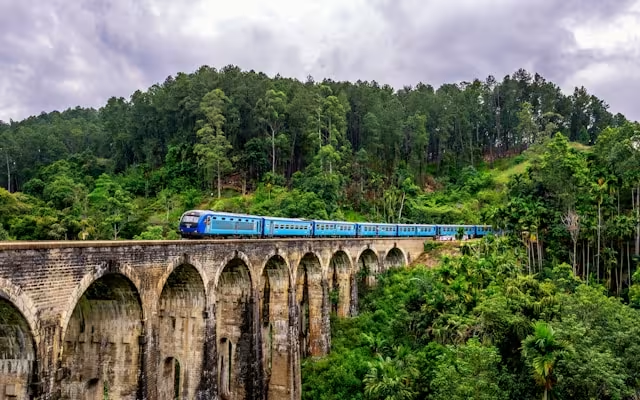
Photo by Hendrik Cornelissen / Unsplash
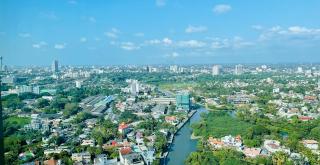
Sri Lanka participates in the GEF-8 Sustainable Cities Integrated Program (SCIP) to strengthen integrated urban planning, climate resilience, and nature-positive development across its metropolitan regions. As a country highly exposed to climate risks—including flooding, landslides, coastal erosion, and extreme weather—Sri Lanka faces growing pressures on its urban infrastructure, ecosystems, and public services.
Through GEF-8 SCIP, the Greater Colombo area is advancing coordinated planning via the Sri Lanka Institute of Local Governance, scaling nature-based solutions, improving climate and biodiversity finance, and promoting decarbonized and circular urban systems. The program supports the development of investment-ready pipelines aligned with national and municipal planning cycles, helping cities transition toward greener and more inclusive growth. Sri Lanka’s engagement enriches the GPSC Global Knowledge Platform with valuable insights on coastal resilience, ecosystem restoration, and integrated metropolitan governance.
UNEP serves as the Implementing Agency. The Executing Agency is the Ministry of Environment.
The project targets the Greater Colombo Area, with Sri Jayawardenapura Kotte (SJK) Municipal Council as the pilot for integrated urban planning and environmental protection. The project aims to address key challenges such as urban sprawl, traffic congestion, and wetland degradation by implementing a coordinated approach that integrates land use, mobility, and environmental conservation. Through pilot projects that focus on electric buses, renewable energy integration, and green corridors, the project will demonstrate viable, sustainable solutions. The outcomes will be scalable across other urban areas in Sri Lanka and similar small island nations facing similar urbanization pressures. The project will also leverage existing investments and policies, such as the Metro Colombo Wetland Strategy and the National Environmental Action Plan, to achieve long-term environmental and socio-economic benefits.
Component 1 – Integrated Urban Planning, Policy Reform, and Data Systems
- Develop policy guidance and coordination mechanisms to strengthen integrated, gender-responsive, climate-resilient urban development across the Ministry of Environment, Ministry of Transport, and SJK Municipal Council.
- Integrate low-emission, nature-positive, and climate resilience considerations into the SJK Development Plan 2031 through formal recommendations and planning revisions.
- Prepare a city-level Greenhouse Gas (GHG) inventory to inform mitigation planning and climate-responsive decision-making.
- Establish an integrated urban data management system to support evidence-based planning and monitoring.
- Develop and submit a comprehensive low-emission urban transport package to the Ministry of Transport for institutional adoption.
Component 2 – Investments in Scalable Urban Sustainability Models
- Demonstrate viable and scalable solar energy models for municipal buildings to reduce grid-based emissions and operational costs.
- Implement integrated wetland conservation and urban ecosystem restoration interventions to enhance flood resilience and biodiversity.
- Deploy a digital wetland monitoring and management system to support ecosystem performance tracking.
- Pilot electric bus operations in SJK to demonstrate operational, financial, and environmental feasibility of e-mobility solutions.
- Integrate non-motorized transport (NMT) solutions within wetland and urban mobility corridors to reduce short-trip motorized emissions.
- Strengthen multi-stakeholder collaboration among government, private sector, and civil society for replicable urban sustainability models.
Component 3 – Communication, Coordination, and Capacity Building
- Deliver national and local training programs on integrated urban planning, climate data-driven decision-making, renewable energy deployment, and e-mobility systems.
- Operationalize a Sri Lankan City Alliance to promote knowledge-sharing, research collaboration, and coordinated urban sustainability action.
- Develop and implement a gender-responsive communication and citizen engagement strategy supporting the transition to sustainable urban development.
- Facilitate participation in the Global Platform for Sustainable Cities (SCIP) for peer learning and global knowledge exchange.
- Integrated Urban Planning: A comprehensive, integrated plan for urban mobility, wetland protection, and sustainable development in Sri Jayawardenapura Kotte, incorporating climate resilience, nature-based solutions, and gender-inclusive practices.
- Sustainable Mobility: The introduction of a pilot electric bus (e-bus) system in SJK, demonstrating the feasibility of transitioning to low-carbon public transport systems.
- Wetland Protection and Conservation: A green corridor linking wetland areas with public spaces, implementing nature-based solutions to protect and restore critical wetland ecosystems.
- Knowledge and Capacity Building: Enhanced knowledge and capacity among urban planners, policymakers, and the private sector to design and implement integrated sustainable urban solutions.
Total GEF Grant (USD)
5,333,331
Total Co-financing (USD)
12,900,000
World Bank Country Profile (Data Portal)
For broader socioeconomic and environmental context, consult the World Bank Country Data Profile. It provides up-to-date indicators on economic performance, social development, climate and environmental metrics, as well as an overview of World Bank operations and financing in the country. Access the country profile here.
GEF Country Profile
For information on Global Environment Facility engagement, see the GEF Country Profile. It presents an overview of GEF-funded projects, thematic areas of intervention, implementing partners, and country resource allocations, offering insight into environmental investment priorities and ongoing initiatives. Access the country profile here.
WOFI Country Profile
For additional insights on subnational public finance, see the OECD Subnational Government Finance Observatory (WOFI) Country Profile. It provides internationally comparable data on revenues, expenditures, investment, debt, and fiscal arrangements across levels of government, offering a useful reference on fiscal capacity and decentralization. Access the country profile here.
Keywords