

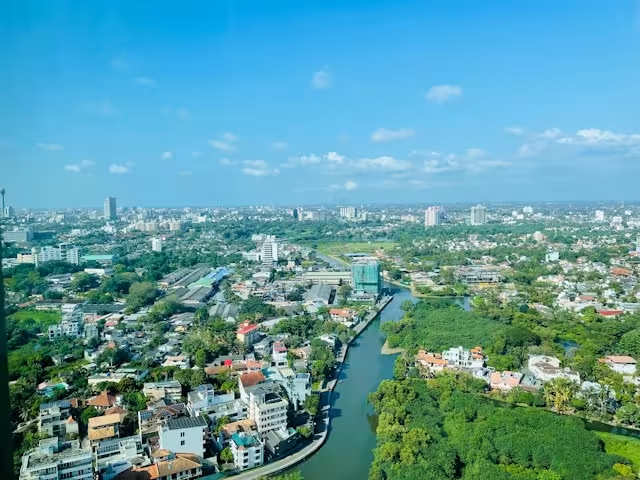
Greater Colombo participates in the GEF-8 Sustainable Cities Integrated Program (SCIP) through the Global Platform for Sustainable Cities (GPSC), advancing Sri Lanka’s transition toward low-carbon, resilient, and inclusive urban development. Implemented with the support of the Sri Lanka Institute of Local Governance, the program promotes integrated metropolitan planning and climate-responsive investment across the capital region. Greater Colombo is focusing on strengthening climate and biodiversity finance mechanisms, scaling nature-based solutions for flood and coastal management, and improving the energy efficiency of infrastructure and urban services. Circular economy approaches are also being embedded into waste, water, and resource management systems to reduce emissions and pollution. By aligning these interventions with both national and municipal planning cycles, Greater Colombo aims to create a model for sustainable urban growth that enhances resilience, safeguards ecosystems, and mobilizes public–private investment in Sri Lanka’s rapidly urbanizing context.