

Violence Against Women and Girls: Disaster Risk Management Brief
April 07, 2015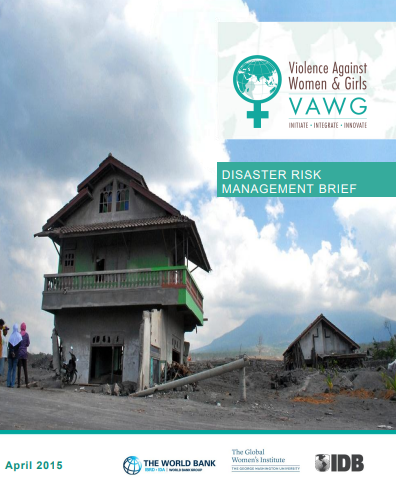
Violence against women and girls (VAWG) has negative impacts on their physical and mental health. Health care settings provide a unique opportunity to identify VAWG survivors, provide critical support services, and prevent future harm.
Women and girls are at far greater risk of experiencing physical and sexual violence in emergency settings.10 Protection from violence is one of the minimum standards established as a principle for humanitarian aid.11 The types of VAWG that are common in emergency settings include rape and other sexual assault, physical assault, psychological and emotional abuse, sexual exploitation, and trafficking.12 It is important to note that the type of response required will vary depending on the forms of VAWG being perpetrated. For example, trafficking of women and girls might involve very different actors and responses (especially if it happens across borders) than increased incidence of rape within a specific location or an increase in physical intimate partner violence (IPV).