

Methodology Note - Participatory Violence Mapping in Informal Urban Settlements
13 OCTOBER 2017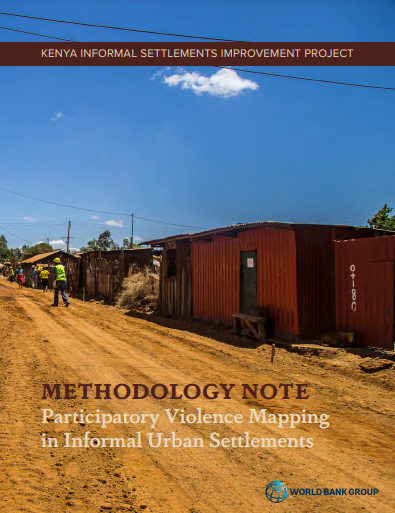
Kenya is experiencing rapid urbanization. In 2016, about 14 million people (25 percent of the country’s population) were living in urban areas, but by 2030 that number is expected to increase to over 22 million, and by 2050 to 40 million—over 50 percent of the population (World Bank 2016). A lack of inclusive growth in Kenya’s cities has led to the proliferation of informal settlements and unequal access to services. Nearly 60 percent of people living in urban areas are in informal settlements, in housing characterized by a lack of permanent walls, no running water, a toilet shared by more than 20 people, and a sleeping room shared by more than three people. They have significantly less access to basic services than people living in formal areas.