


Knowledge Products
The GPSC hosts a digital library featuring practical tools, reports, and case studies. Explore curated resources across thematic areas, filtering by topic or region to find the insights required to advance urban sustainability.
Report
Compendium for City Good Practice Series: How Paris Is Leveraging Nature For Climate Resilience
This report, as part of the Compendium for City Good Practice series, highlights Paris's innovative approach to climate resilience through the strategic integration of nature into urban environments. It offers a comprehensive overview of Paris's strategy on urban nature, showcasing how the city is integrating biodiversity into planning, leveraging green spaces, biodiversity corridors, and sustainable landscaping to mitigate the impacts of climate change. The report serves as a valuable resource for cities worldwide seeking to emulate Paris's successful model ofReport
Driving energy efficient innovation through procurement - A practical guide for public authorities
This guide provides clear steps for public authorities that want to become “innovation-friendly” – that is achieving the most innovative
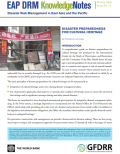
Disaster Preparedness for Cultural Heritage
A comprehensive guide on disaster preparedness for cultural heritage was produced by the international center for the study of preservation
Study of Mercury-containing Lamp Waste Management in Sub-Saharan Africa
The overall amount of mercury in the mercury containing lamps (MCL) market in Sub-Saharan Africa is low compared to other
Korea Environmental Policy Bulletin - Extended Producer Responsibility (EPR)
The Korean government introduced its Extended Producer Responsibility (EPR) system in 2000 that strengthened producers responsibility from the production stage
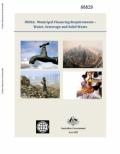
India: Municipal Financing Requirements - Water, Sewerage, and Solid Waste
This report presents the main results from cost models that were developed as an input to the High Powered Expert
Brazil Low Carbon Case Study: Waste
This report synthesis the findings for the waste sector of a broader study, the Brazil low carbon study, which was
Potential Climate Change Mitigation Opportunities in Waste Management Sector in Vietnam
Along with economic growth and improved living standards, waste from households, industries, and commercial or service establishments is expected to
Potential Climate Change Mitigation Opportunities in Waste Management Sector in Vietnam
Along with economic growth and improved living standards, waste from households, industries, and commercial or service establishments is expected to
Potential Climate Change Mitigation Opportunities in Waste Management Sector in Vietnam
Along with economic growth and improved living standards, waste from households, industries, and commercial or service establishments is expected to