

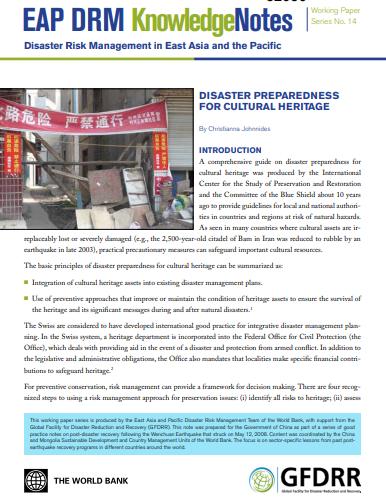
A comprehensive guide on disaster preparedness for cultural heritage was produced by the international center for the study of preservation and restoration and the committee of the blue shield about 10 years ago to provide guidelines for local and national authorities in countries and regions at risk of natural hazards. As seen in many countries where cultural assets are irreplaceably lost or severely damaged (e.g., the 2,500-year-old citadel of Bam in Iran was reduced to rubble by an earthquake in late 2003), practical precautionary measures can safeguard important cultural resources. For preventive conservation, risk management can provide a framework for decision making. There are four recognized steps to using a risk management approach for preservation issues: (i) identify all risks to heritage; (ii) assess the magnitude of each risk; (iii) identify possible mitigation strategies; and (iv) evaluate the costs and benefits associated with each strategy.