

Resilient Cultural Heritage: Learning from the Japanese Experience

June 15, 2020
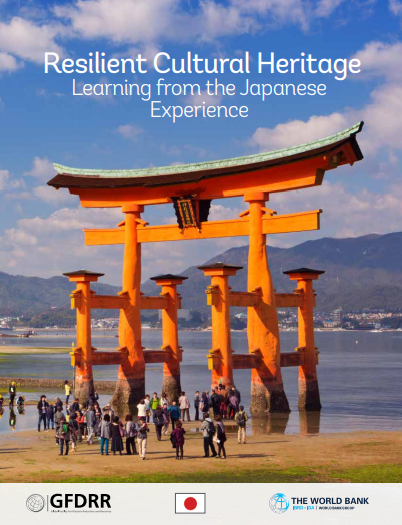
Japan’s cultural heritage (CH) is among the richest in the world, but the country is faced with some of the most difficult challenges in its exposure to hazards. With earthquakes, volcanic eruptions, tsunamis, typhoons, floods, landslides, and fire, Japan is ranked second, behind the Philippines, for exposure to natural hazards, according to the INFORM Global Risk Index 2019. This has forced the country to develop a culture of continuous improvement in the face of hazard events—a quality that is particularly notable in its management of its CH. 
 
This report reflects good practices and lessons learned from Japan to support international practitioners in the fields of disaster risk management (DRM), CH, and public policy, who are seeking to enhance the disaster resilience of CH and communities in their countries.
Related content
View all

Culture

Cities, Culture, Creativity: Learning from the Republic of Korea’s Experience

This report describes examples demonstrating the leading role that Korea can play globally and provides practical insights on the importance of cultural and creative industries (CCIs) for economic
Knowledge Product

Learn more

Culture

Seoul's Experience in Cultural Heritage Sustainable Tourism and Urban Regeneration

This report details the evolution of Seoul’s efforts since the 1960s to balance all three elements of this critical equation: cultural heritage, sustainable tourism, and urban regeneration. The five
Knowledge Product

Learn more

Culture

Conserving the Past as a Foundation for the Future: China-World Bank Partnership on Cultural Heritage Conservation

The rich cultural heritage of China is an essential touchstone of its collective identity. The country's archaeological sites, historic architecture, expressive arts, cultural landscapes, and ethnic
Knowledge Product

Learn more