

Transport Emission Mapping, Monitoring and Capacity Building in 5 Selected African Cities
30 NOVEMBER 2017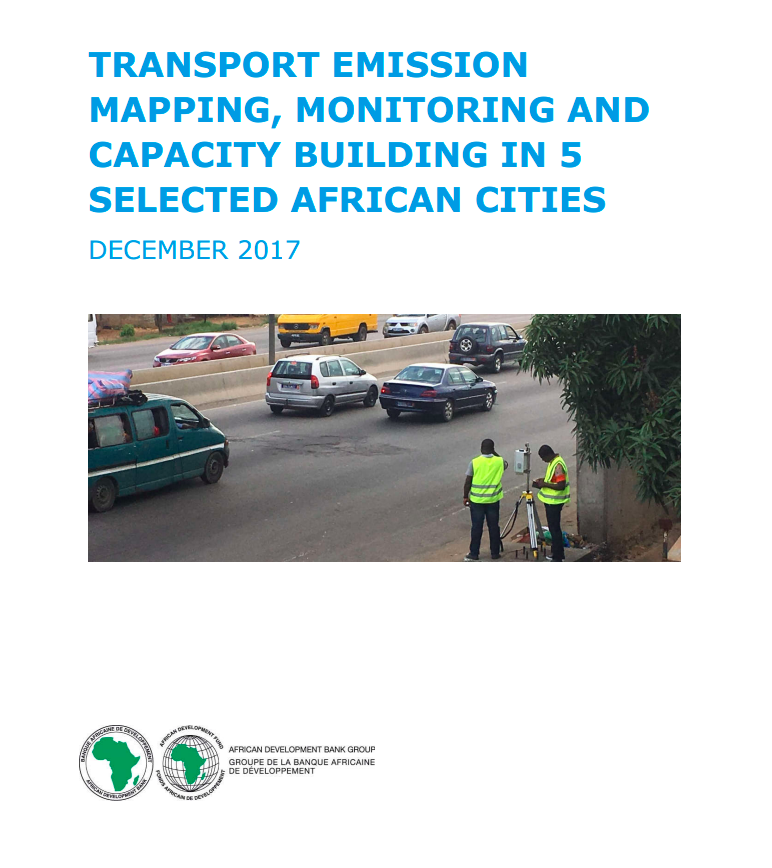
The report, commissioned by the African Development Bank and prepared by Ramboll Environ, documents a pilot project in five African cities—Abidjan, Rabat, Yaoundé, Dar es Salaam, and Lusaka—aimed at building institutional capacity to monitor and manage transport-related emissions. It highlights the severe health and environmental impacts of urban air pollution driven by rapid motorization, aging vehicle fleets, and weak monitoring systems, and outlines a systematic approach to emissions mapping, air quality monitoring, and socio-economic analysis. The project involved procuring cost-effective equipment, producing baseline and forecast emissions maps, training government staff, reviewing regulatory frameworks, and developing cost-benefit analysis tools to support low-emission transport technologies. Ultimately, the report provides findings and recommendations to scale up these efforts across African cities, aligning with the Bank’s broader green growth strategy to improve air quality, reduce climate impacts, and promote sustainable urban transport.