

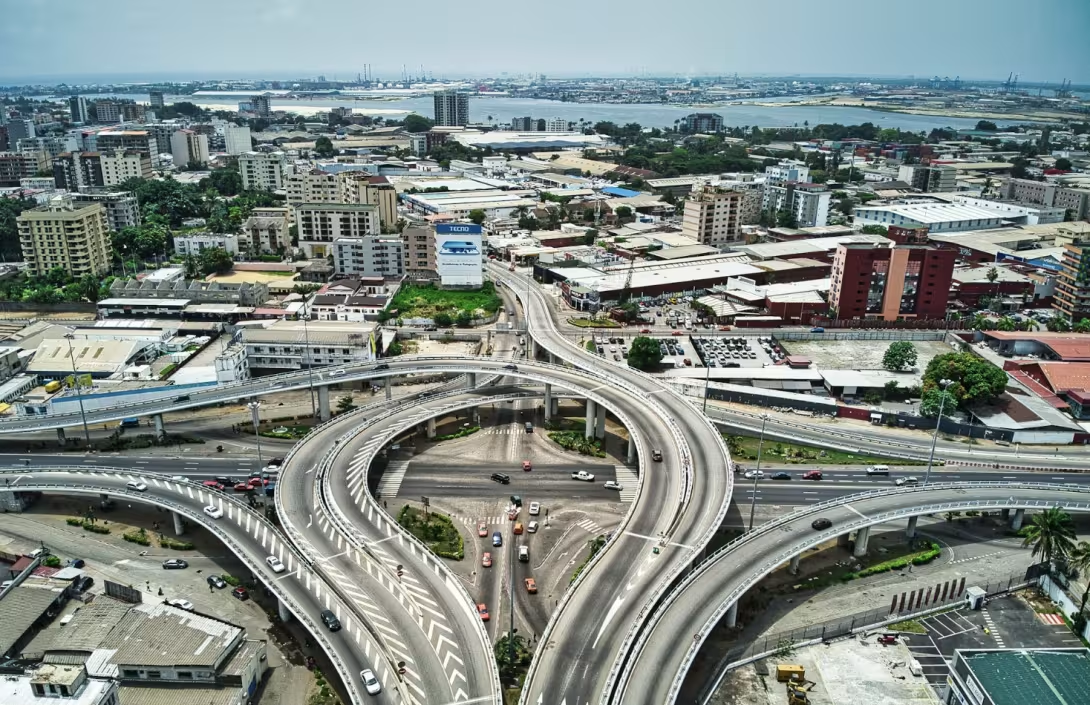
Abidjan

AREA:
2,119 km2 (818 sq mi)
POPULATION:
6,056,880
Côte d'Ivoire

Abidjan, the economic capital of Côte d’Ivoire and one of Africa’s most populous French-speaking cities, participated in the GEF-6 Global Platform for Sustainable Cities (GPSC). The city faces rapid and largely informal urban expansion, resulting in unplanned land occupation, rising congestion, and deteriorating air quality. Through the GPSC initiative, Abidjan advances sustainable mobility planning and integrated urban management by developing a mobility plan, resilience plan, and intelligent transport system strategy. Efforts focus on improving air quality through cleaner fuels, younger vehicle fleets, and strengthened emissions standards, while deploying digital monitoring tools and climate adaptation measures in transport infrastructure. Together, these actions enhance urban resilience, reduce greenhouse gas emissions, and improve health and livability in the metropolitan region.
Recent initiatives

Transit-Oriented Development

Transit-Oriented Development Public transportation is often a city’s best strategy to curb congestion and reduce greenhouse gas emissions. But rapidly expanding populations and insufficient financing

Municipal PPP

Well-designed and well-managed Public-Private Partnerships (PPPs) can deliver high-quality and cost-efficient infrastructure, helping municipalities address critical infrastructure needs in the face

Gender and Cities

The World Bank Group takes as its starting point that no country, community, or economy can achieve its potential or meet the challenges of the 21st century without the full and equal participation of
Related content

EO4SD-Urban Project: Abidjan City Report GPSC is providing cities with urban extent imagery to facilitate a finer-grained understanding of urban expansion. This GPSC knowledge product for Abidjan contains information related to the provision
Knowledge Product