

Peru
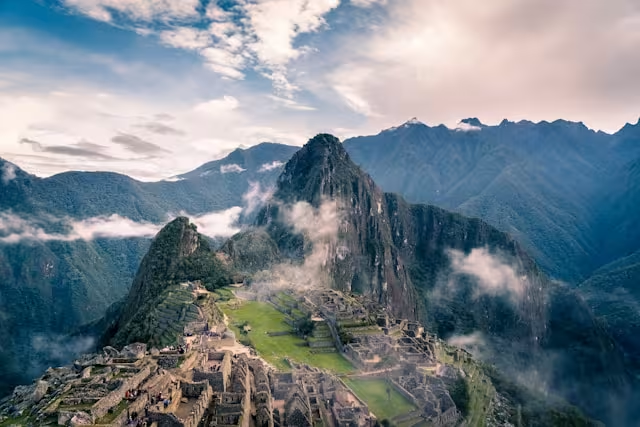
Photo by Willian Justen de Vasconcellos / Unsplash
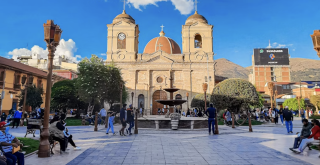
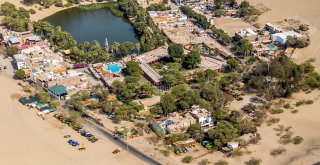
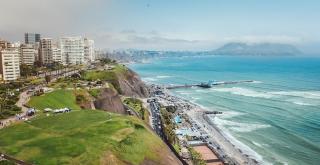
Peru has been a consistent and committed partner of the Global Environment Facility’s sustainable cities agenda, participating in both GEF-6 and GEF-8 cycles and actively contributing to the evolution of the GPSC network. As one of the most geographically and ecologically diverse countries in the world—from Andean highlands to Amazonian forests and rapidly growing coastal cities—Peru faces complex urban challenges, including seismic risk, water scarcity, climate impacts, and growing pressure on natural ecosystems. Through GEF-6 initiatives, Peruvian cities such as Lima–Callao, Huancayo, and Ica advanced integrated planning, climate mitigation and adaptation, sustainable mobility, and urban–rural linkages, while strengthening governance and institutional capacity.
Under GEF-8 SCIP, Peru continues deepening this trajectory by promoting nature-positive, resilient, and inclusive metropolitan development, expanding the use of nature-based solutions, decarbonized infrastructure, and circular economy models. Peru’s multi-cycle engagement has made it a key source of knowledge and innovation within the GPSC, demonstrating how sustained commitment can scale urban transformation across regions and planning systems.
IUCN and the Inter-American Development Bank (IDB) serve as the Implementing Agencies. The Executing Agencies are the Ministry of the Environment, the Ministry of Housing, Construction and Sanitation, Profonanpe, and the participating provincial municipalities.
The project focuses on five areas: integrated low-carbon urban planning; nature-positive resource and ecosystem management; governance and sustainable urban finance; circular, low-carbon economic development; and knowledge management. Activities include developing regulatory reforms, implementing sustainable neighborhood models, deploying green and blue infrastructure, improving waste management, restoring wetlands, hills, and fragile ecosystems, strengthening water management, and enabling financial mechanisms such as land value capture, climate finance, and public-private partnerships.
Component 1 – Strengthening Governance and Planning for Integrated, Sustainable and Socially Inclusive Urban Management
Develop and operationalize the National Strategy and Action Framework for Sustainable Cities to 2050 to guide long-term urban transformation.
Strengthen land management and territorial planning instruments through ecological-economic zoning and urban diagnostics in Lima-Callao, Ica, and Huancayo.
Institutionalize environmental governance mechanisms by reinforcing metropolitan and regional environmental commissions with gender-responsive approaches.
Prepare city-level GHG inventories and decarbonization scenarios to inform mitigation planning in Ica and Huancayo.
Develop and implement a gender-responsive Sustainable Urban Mobility Plan for Ica, including active mobility pilot interventions.
Prepare technical guidelines for resilient and low-carbon construction standards aligned with national climate objectives.
Component 2 – Integrated Natural Resource Management and Nature-Based Urban Solutions
Develop national and provincial biodiversity and natural resource management strategies integrating ecosystem restoration and climate adaptation objectives.
Prepare ecosystem recovery master plans and technical studies for degraded urban and peri-urban ecosystems.
Design and implement pilot ecosystem restoration interventions in priority urban areas.
Develop Sustainable Urban Drainage System (SUDS) master plans and implement green drainage pilot projects in Ica and Huancayo.
Conduct urban heat island assessments and implement pilot adaptation measures to mitigate thermal stress in Lima-Callao, Ica, and Huancayo.
Prepare investment documentation and financing proposals for biodiversity and NbS projects under the public investment system.
Component 3 – Financing Mechanisms for Sustainable Urban Development
Strengthen regulatory and institutional frameworks for urban environmental finance and climate-responsive public investment.
Design incentive mechanisms and fiscal instruments to enhance municipal finance performance linked to environmental outcomes.
Develop Payment for Environmental Services (PES) schemes to support urban ecosystem conservation.
Establish multipurpose urban cadastre systems in Ica and Huancayo to improve land value capture and investment planning.
Prepare a portfolio of bankable low-carbon and resilience-oriented urban investment projects.
Component 4 – Sustainable, Resilient and Low-Carbon Neighborhoods
Develop a national framework for gender-responsive neighborhood upgrading and inclusive urban regeneration.
Strengthen municipal management systems for neighborhood improvement programs.
Implement transformative neighborhood pilot projects integrating low-carbon infrastructure, biodiversity enhancement, and climate resilience measures.
Prepare integrated investment profiles for consolidated urban areas incorporating mitigation and adaptation solutions.
Component 5 – Knowledge Management, Capacity Building and Communication
Develop and operationalize an urban sustainability monitoring and evaluation system aligned with GEF core indicators.
Strengthen national and municipal environmental information systems for decision-making and performance tracking.
Deliver technical training modules and capacity-building programs on sustainable urban development.
Facilitate participation in GPSC global knowledge exchange platforms and regional peer-learning initiatives.
Implement communication campaigns and Knowledge, Attitudes and Practices (KAP) surveys to promote public engagement in sustainable urban practices.
- 2,702 ha restored; 61,406 ha under improved practices.
- Approx. 13.25 million tCO₂e mitigated.
- Strengthened planning instruments and regulatory frameworks across three cities.
- Improved water resource management and reduced pressure on fragile ecosystems.
- Sustainable neighborhood models implemented with NbS and circular solutions.
- Enhanced solid waste management and reduction of plastic pollution (20,244 tons avoided).
- Strengthened governance and multi-level coordination mechanisms.
- Mobilized over USD 109 million in co-financing for sustainable urban development.
- Over 1.18 million direct beneficiaries.
Total GEF Grant (USD)
13,333,333
Total Co-financing (USD)
109,907,146
World Bank Country Profile (Data Portal)
For broader socioeconomic and environmental context, consult the World Bank Country Data Profile. It provides up-to-date indicators on economic performance, social development, climate and environmental metrics, as well as an overview of World Bank operations and financing in the country. Access the country profile here.
GEF Country Profile
For information on Global Environment Facility engagement, see the GEF Country Profile. It presents an overview of GEF-funded projects, thematic areas of intervention, implementing partners, and country resource allocations, offering insight into environmental investment priorities and ongoing initiatives. Access the country profile here.
WOFI Country Profile
For additional insights on subnational public finance, see the OECD Subnational Government Finance Observatory (WOFI) Country Profile. It provides internationally comparable data on revenues, expenditures, investment, debt, and fiscal arrangements across levels of government, offering a useful reference on fiscal capacity and decentralization. Access the country profile here.