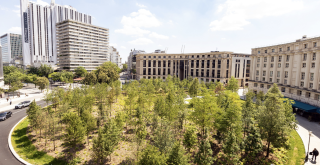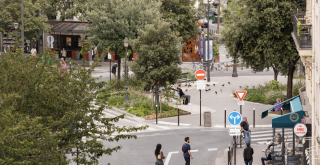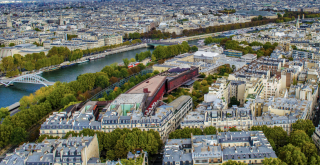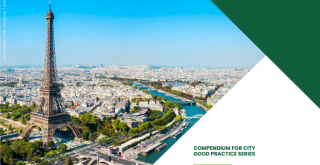


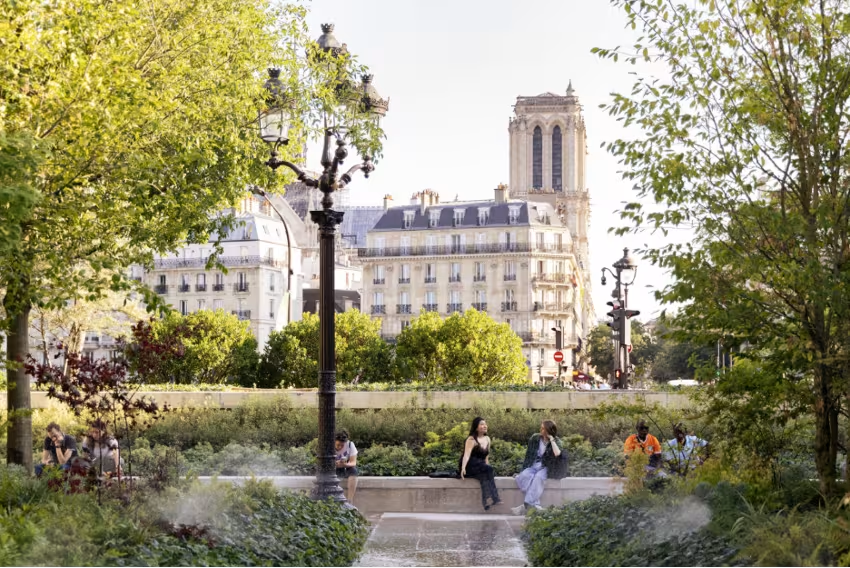
The City of Paris has emerged as a leading example of how dense cities can integrate urban nature, climate action, and people-centered development. As one of Europe’s most densely populated capitals, Paris faces significant spatial and environmental pressures that shape its urban development choices. In response, the city has positioned climate resilience, biodiversity, and public space at the center of its urban transformation agenda.
As a Lighthouse City under the GEF-8 Sustainable Cities Integrated Program (SCIP), Paris promotes an integrated urban model that connects climate neutrality, biodiversity restoration, mobility, and public space within a coherent planning framework. Over the past decade, the city has progressively shifted from viewing green space as an isolated amenity to recognizing nature as essential urban infrastructure that supports resilience, public health, and quality of life.
This transition has been reinforced by increasing climate risks, including more frequent and intense heatwaves. Through the Paris Climate Action Plan and the Bioclimatic Local Urban Plan (PLU Bioclimatique), the city has translated long-term climate and biodiversity goals into urban planning and investment decisions. These frameworks align land use, mobility, public space, and ecological priorities, demonstrating how dense cities can move beyond isolated projects toward a more systemic and nature-positive model of urban development.
| Key Links |
Bioclimatic Local Urban Plan (PLU Bioclimatique)
|
Climate planning
|
Planning maps and methodology
|
Partnership with GPSC
|
Paris increasingly treats nature as essential urban infrastructure that supports biodiversity, climate adaptation, water management, and public health. Through its Biodiversity Plan and related ecological strategies, the city is strengthening ecological networks, expanding green spaces, and integrating biodiversity into urban planning and neighborhood development.
This approach recognizes that urban nature provides critical services beyond recreation and aesthetics. Parks, trees, green corridors, schoolyards, and blue-green systems help cool the city, manage stormwater, improve air quality, and create healthier and more resilient neighborhoods. By embedding these functions into the urban fabric, Paris is using nature to address climate risks while enhancing everyday quality of life.
One visible example is the city’s Cours Oasis program, which transforms schoolyards into greener, cooler, and more permeable spaces designed to reduce heat stress and improve well-being. Together with biodiversity corridors, expanded vegetation, and ecological restoration initiatives, these interventions illustrate how nature-based solutions can support both environmental and social resilience in dense urban settings.
| Key Links |
Biodiversity and Nature-based Solutions
|
Knowledge and Mapping Tools
|
Assessment Tools – Measuring Biodiversity and Urban Nature
|
Implementation Examples
|
Paris has become internationally recognized for transforming streets and public spaces through active mobility, pedestrianization, and neighborhood greening. Over the past decade, the city has significantly expanded cycling infrastructure, pedestrianized major corridors such as the Seine riverbanks, and reallocated space previously dedicated to private vehicles toward public use and urban nature.
This transformation is closely connected to Paris’ broader vision of creating healthier, more accessible, and climate-resilient neighborhoods. Through local greening initiatives, redesigned public spaces, and schoolyard and community-based projects, the city is bringing nature closer to residents while improving everyday urban life. These interventions help reduce heat, improve walkability, and create more inclusive and socially vibrant public spaces.
Paris’ “15-minute city” approach reinforces this vision by promoting access to daily services, green spaces, and community amenities within walking or cycling distance. Together, mobility and neighborhood transformation demonstrate how streets can evolve beyond transport corridors to become multifunctional spaces that support climate action, biodiversity, and quality of life.
Transferability
Paris’ experience illustrates how reclaiming streets and integrating neighborhood greening can be adapted across diverse urban contexts. Cities do not need to rely solely on large-scale redevelopment projects; many interventions can be implemented progressively through street redesign, public space improvements, schoolyard greening, cycling infrastructure, and community-led initiatives. By aligning mobility, public space, and climate goals, cities can create healthier and more resilient neighborhoods while adapting solutions to local priorities, capacities, and constraints.
| Key Links |
Hyper proximity and Urban Transformation
|
Co-creation and City Participation
|
Neighborhood Greening Tools (for Residents and Co ownerships)
|