

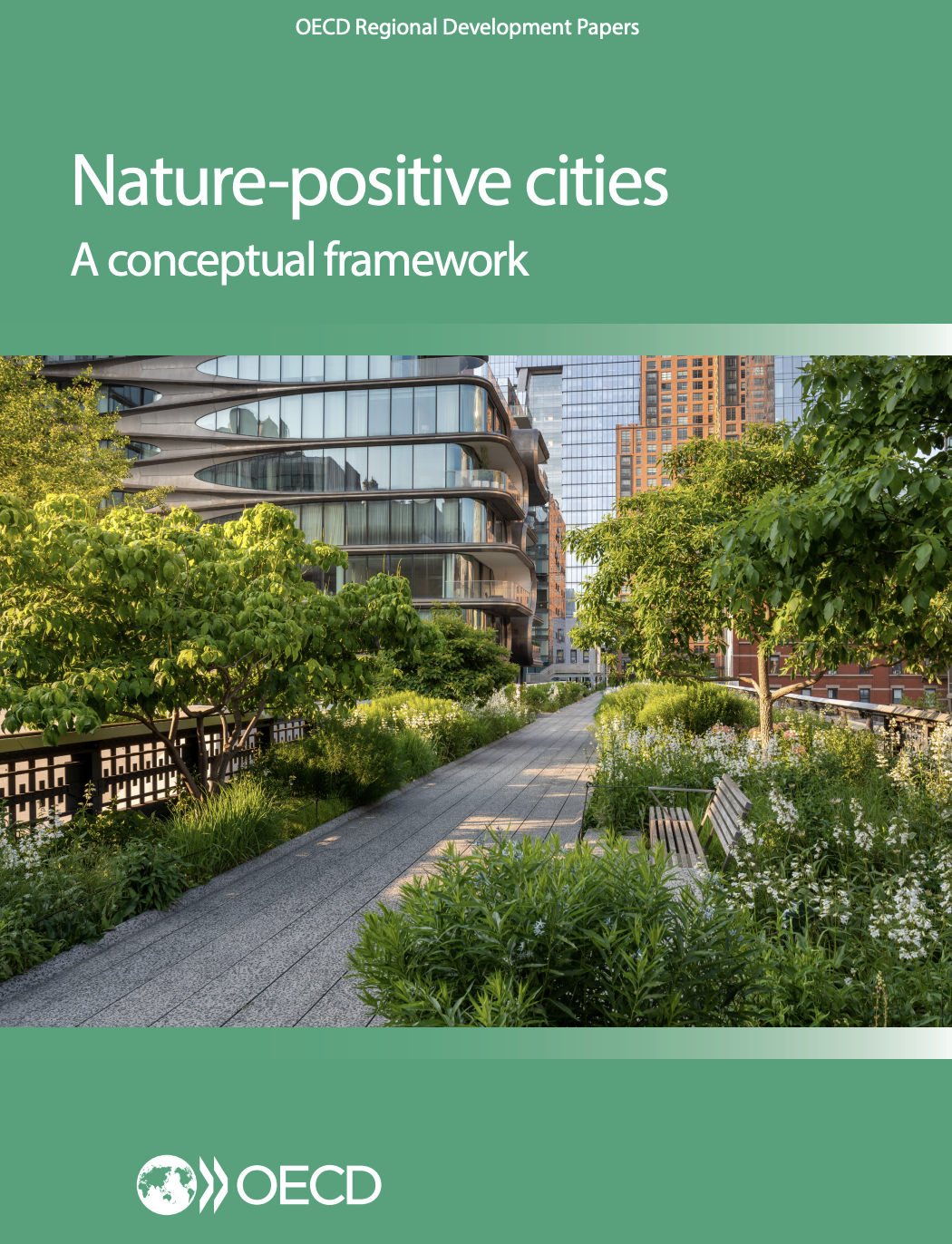
Urban nature and biodiversity face growing pressure from urbanization, which has brought prosperity but also accelerated the loss of forests, wetlands and grasslands. Increasing ecosystem degradation, climate risks and pollution carry significant environmental, social and economic costs for cities, calling for a shift from fragmented, reactive actions to integrated, place-based, and nature-positive approaches that recognize the multiple benefits of urban nature. This paper explores how cities can address biodiversity loss and better harness these benefits, in line with Target 12 of the 2022 Kunming-Montreal Global Biodiversity Framework.
Drawing on current practices, the paper identifies key constraints, including trade-offs with competing urban priorities, gaps in technical guidance, limited financial resources, and weak monitoring and evaluation processes. In response to these barriers, the paper proposes a comprehensive Nature-Positive City (NPC) framework to support policymakers in integrating biodiversity, climate, well-being, and economic objectives into urban planning, investment, and decision making across all levels of government.