

Dar es Salaam

AREA:
1,599 km2 (617 sq mi)
POPULATION:
7,776,000
Tanzania

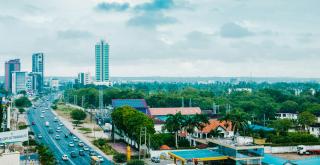
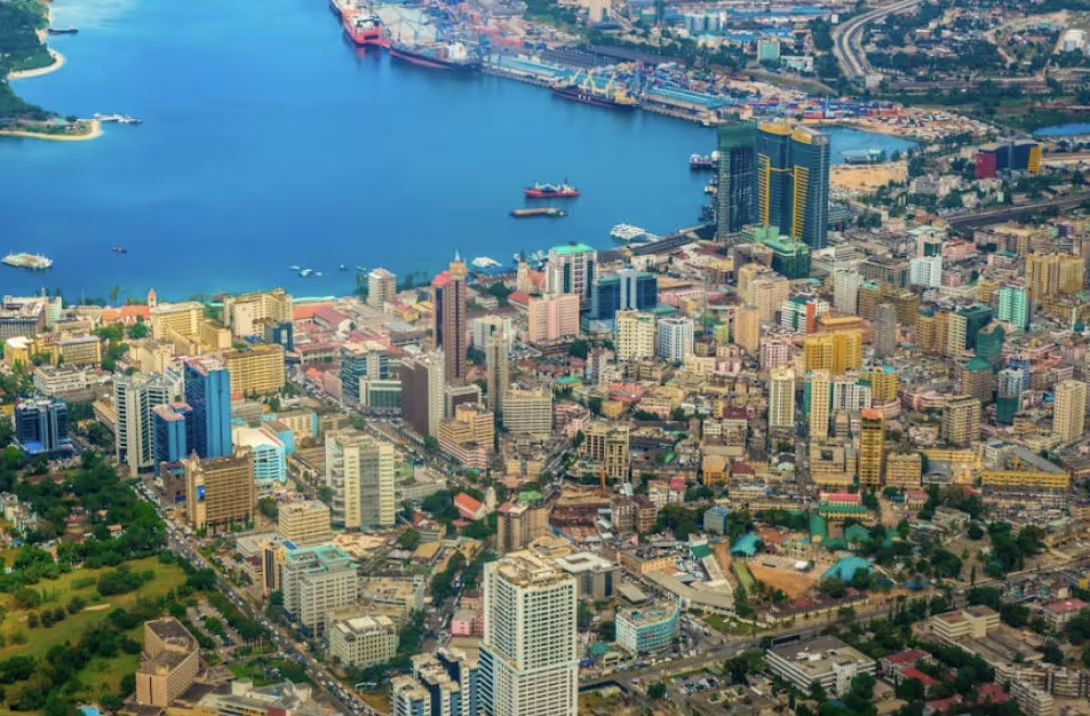
Dar es Salaam, Tanzania’s largest city and economic hub, is an active member of the Global Platform for Sustainable Cities (GPSC) network, sharing its pioneering work on green infrastructure and nature-based solutions. Supported by the World Bank, the city is reimagining its urban landscape through initiatives that integrate restored wetlands, green corridors, and flood-resilient public spaces into metropolitan planning. These actions enhance biodiversity, reduce flood risks, and improve livability in one of Africa’s fastest-growing coastal cities. 

Dar es Salaam’s leadership has been showcased through its participation in the GPSC’s Cities4Biodiversity Deep-Dive, African City Academies, and multiple global workshops and publications, where it has shared lessons on participatory river basin planning and integrated resilience design. By embedding nature into its urban growth model, Dar es Salaam demonstrates how African cities can use nature-based solutions to adapt to climate challenges while fostering inclusive, green, and resilient development.

Recent initiatives

Transit-Oriented Development

Transit-Oriented Development Public transportation is often a city’s best strategy to curb congestion and reduce greenhouse gas emissions. But rapidly expanding populations and insufficient financing

Municipal PPP

Well-designed and well-managed Public-Private Partnerships (PPPs) can deliver high-quality and cost-efficient infrastructure, helping municipalities address critical infrastructure needs in the face

Gender and Cities

The World Bank Group takes as its starting point that no country, community, or economy can achieve its potential or meet the challenges of the 21st century without the full and equal participation of
Related content

Flooding in East Africa: The impacts on and implications for cities in East Africa, with a case study of Dar es Salaam This report is aimed primarily at policymakers in emerging megacities, where the population is set to reach more than 3 million by 2050, but also at practitioners and other interested parties. The
Knowledge Product