

Mongolia
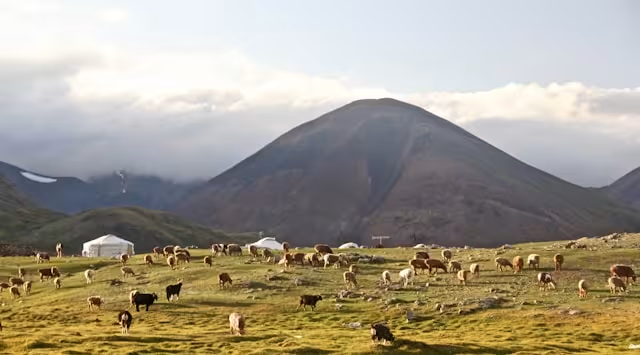
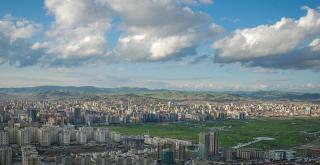
Photo by Bolatbek Gabiden / Unsplash
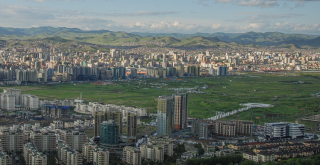
Mongolia participates in the GEF-8 Sustainable Cities Integrated Program (SCIP) to advance integrated, climate-resilient, and low-carbon urban development across its rapidly growing metropolitan regions. With fast-expanding cities such as Ulaanbaatar, Erdenet, and Darkhan, Mongolia faces acute challenges linked to air pollution, winter energy demand, land-use pressures, and climate vulnerabilities including extreme temperatures and worsening flash floods.
Through GEF-8 SCIP and the GPSC Global Knowledge Platform, Mongolian cities are strengthening metropolitan governance, improving municipal finance systems, and scaling nature-based solutions and circular economy approaches. The program supports integrated land-use planning, decarbonized infrastructure, and investment-ready project pipelines aligned with national priorities for green growth and climate resilience. Mongolia’s engagement—marked by its commitment to urban innovation despite harsh climatic conditions—contributes valuable insights to the global GEF network on managing rapid urbanization in cold-climate, low-density contexts.
UNDP serves as the Implementing Agency. The Executing Agency is the Ministry of Environment and Tourism
This project targets urban and peri-urban areas in Ulaanbaatar, Erdenet, and Darkhan, focusing on mitigating air pollution, improving waste management, increasing green spaces, and enhancing climate resilience. Interventions will include nature-based solutions for flood protection, decarbonization of urban energy systems, and adoption of circular economy practices like sustainable waste management and water conservation. Additionally, the project will work on enhancing governance by strengthening policy frameworks, institutional capacities, and community engagement. This integrated approach aims to overcome barriers to sustainable urbanization, with active participation from local governments, communities, and the private sector.
Component 1 – Green Urban Policy, Planning, and Sustainable Finance
- Adoption of gender-responsive Green City development plans integrating biodiversity targets, ecosystem services, and GBF-aligned indicators
- Revision and institutionalization of integrated spatial and land management plans incorporating SLM, natural capital valuation, and ecological zoning
- Establishment of cross-sector governance and monitoring mechanisms for integrated green urban development
- Strengthening of municipal green finance systems, including results-based budgeting, public financial management reforms, and green investment frameworks
- Design and piloting of blended finance and inclusive municipal financing instruments for scalable green infrastructure
Component 2 – Nature-Positive, Low-Carbon, and Climate-Resilient Investments
- Implementation of low-emission urban measures, including energy efficiency and carbon-neutral development actions
- Large-scale land restoration and sustainable land management interventions, including reforestation, agroforestry, grassland rehabilitation, and riparian restoration
- Integrated flood risk management and blue–green infrastructure deployment in priority cities
- Expansion of urban and peri-urban green infrastructure and ecological connectivity
- Development of circular solid waste management systems, including recycling and material recovery facilities
- Urban food system strengthening and climate-smart greenhouse production systems
- Water efficiency and loss reduction interventions, including smart water management upgrades
- Mobilization of public and private investment for scalable green infrastructure projects
Component 3 – Capacity Building, Digital Innovation, and Knowledge Exchange
- Implementation of Green City capacity development programs for municipal authorities
- Development of digital planning, monitoring, and innovation platforms for green urban management
- Community engagement and participatory governance mechanisms
- Integration into global knowledge exchange networks (GPSC and GEF IP platforms)
- Systematic gender mainstreaming across planning, finance, and monitoring systems.
- Strengthened policy, regulatory, and institutional frameworks for integrated urban planning.
- Increased investment in nature-positive and resilient urban infrastructure in Ulaanbaatar, Erdenet, and Darkhan.
- Enhanced community participation in urban planning processes, especially in marginalized ger areas.
- Demonstration of innovative urban solutions in energy efficiency, sustainable waste management, and water conservation.
- Strengthened capacity for green, inclusive urban development across local governments, the private sector, and civil society.
- Reduced urban environmental degradation, with measurable improvements in air and water quality, flood resilience, and biodiversity in targeted urban areas.
Total GEF Grant (USD)
8,130,000
Total Co-financing (USD)
70,000,000
World Bank Country Profile (Data Portal)
For broader socioeconomic and environmental context, consult the World Bank Country Data Profile. It provides up-to-date indicators on economic performance, social development, climate and environmental metrics, as well as an overview of World Bank operations and financing in the country. Access the country profile here.
GEF Country Profile
For information on Global Environment Facility engagement, see the GEF Country Profile. It presents an overview of GEF-funded projects, thematic areas of intervention, implementing partners, and country resource allocations, offering insight into environmental investment priorities and ongoing initiatives. Access the country profile here.
WOFI Country Profile
For additional insights on subnational public finance, see the OECD Subnational Government Finance Observatory (WOFI) Country Profile. It provides internationally comparable data on revenues, expenditures, investment, debt, and fiscal arrangements across levels of government, offering a useful reference on fiscal capacity and decentralization. Access the country profile here.
Keywords