Waste Resources Management and Utilization Policies of Korea (English and Korean)
May 13, 2016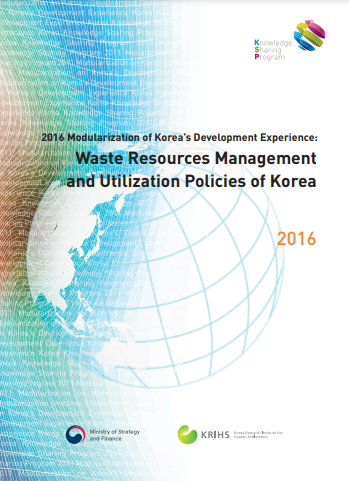
The study of Korea’s economic and social transformation offers a unique window of opportunity to better understand the factors that drive development. Within approximately a single generation, Korea transformed itself from an aid-recipient basket-case to a donor country undergoing fast-paced and sustained economic growth. What makes Korea’s experience even more remarkable is that the fruits of Korea’s rapid growth were relatively widely shared.
The purpose of this research is to arrange and introduce Korea’s waste management policies in order to modularize Korean knowledge and experience in this field, thereby establishing customized knowledge content that may be used as basic materials in Knowledge Sharing Projects for developing countries and other cooperative projects for development. In this chapter, an overall introduction is made on this research, including its background, purpose, and the method of implementation.