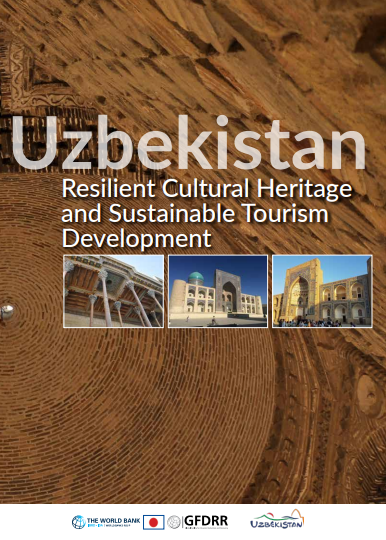


Uzbekistan: Resilient Cultural Heritage and Sustainable Tourism Development

December 13, 2020

In Uzbekistan, authorities instituted strong health and social distancing measures in March to contain local transmission of COVID-19, with national and international flights being cancelled. This has resulted in more than 1,500 tour operators and 1,200 hotels suspending their activities and affected the income of more than 250,000 people, including guides, artisans, and professionals working at architectural monuments, spa facilities, catering facilities, and transport facilities. However, leaders and policy makers must also find opportunities in these moments to make investments and reforms that can drive sustainable development, such as investments in risk identification, risk reduction, and emergency preparedness and response. For cultural heritage, both tangible (e.g., sites and structures) and intangible (e.g, traditions and practices), this experience may provide an opportunity to strengthen protection and resilience.

Countries

Theme

External

Visit link
Related content
View all

Tourism

Uzbekistan: Resilient Cultural Heritage and Sustainable Tourism Development

In Uzbekistan, authorities instituted strong health and social distancing measures in March to contain local transmission of COVID-19, with national and international flights being cancelled. This has
Knowledge Product

Learn more

Tourism

Cultural Heritage, Sustainable Tourism and Urban Regeneration: Capturing Lessons and Experience from Japan with a Focus on Kyoto

The World Bank Group (WBG) has long recognized that the restoration and preservationof cultural heritage, urban regeneration, and sustainable tourism can play a vital role in developing countries’
Knowledge Product

Learn more

Tourism

Kyoto A Creative City : Leveraging Creativity for City Competitiveness and Inclusive Urban Transformation

This report builds on the findings from the Technical Deep Dive (TDD) ‘Creative Cities: Case of Kyoto,’ organized by the Tokyo Development and Learning Center (TDLC) in partnership with UNESCO and the
Knowledge Product

Learn more