

GPSC Hosts First City Academy for Asia in Guangzhou

19 September 2025 /
Blog

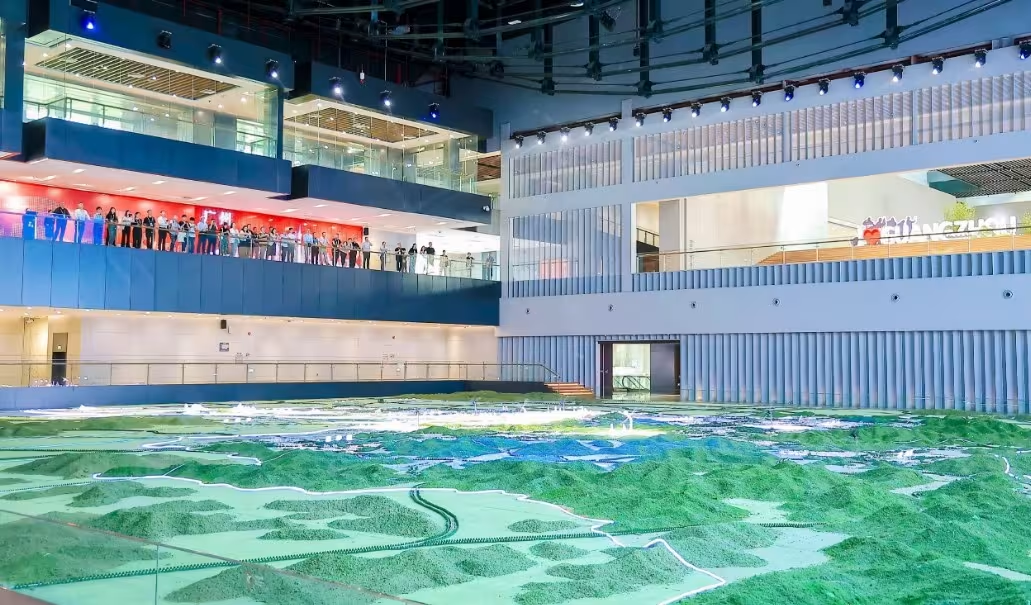
From May 12 to 14, 2025, the GPSC held its first City Academy for Asia in Guangzhou, co-organized with the China Center for Urban Development (CCUD) in collaboration with the Guangzhou Municipal Planning and Natural Resources Bureau and with support from the Guangzhou Urban Planning and Survey Research Institute (GZPI).
 
The Academy brought together policymakers, technical experts, and development partners from across Asia and beyond to explore practical, forward-looking solutions for green, resilient, and inclusive urban development. As the region continues to urbanize at an unprecedented pace, cities face growing climate and environmental pressures that require a fundamental shift in how urban development is planned and financed.
 
Thanks to your leadership and close collaboration, the Academy highlighted the urgency of moving beyond siloed approaches—toward integrated, climate-smart, and nature-positive urban development models that respond to both local priorities and global challenges. The resounding success of the Academy underscored the value of strong partnerships between national institutions and global platforms in advancing impactful peer learning, policy dialogue, and knowledge exchange.

Download the presentations here   I   Download the event photos here

Partners

Cities

Countries

Latest Knowledge resources
View all

Nature

Compendium for City Good Practice Series: How Paris Is Leveraging Nature For Climate Resilience

This report, as part of the Compendium for City Good Practice series, highlights Paris's innovative approach to climate resilience through the strategic integration of nature into urban environments. It offers a comprehensive overview of Paris's strategy on urban nature, showcasing how the city is integrating biodiversity into planning, leveraging green spaces, biodiversity corridors, and sustainable landscaping to mitigate the impacts of climate change. The report serves as a valuable resource for cities worldwide seeking to emulate Paris's successful model of

Report

Inclusivity

Toward Developing a Mobility and Gender Index

Although the benefits of a gender-inclusive approach to mobility for transport decarbonization, access to jobs, and human capital advancement have been increasingly recognized globally, this topic has not received sufficient attention. The lack of attention to gendered mobility barriers is partly due to a limited understanding of the wider benefits of inclusive transport services for development, which is caused by the absence of sex-disaggregated mobility data highlighting gender inequalities. One of the obstacles to this gender-inclusive approach is the absence