

How Paris is Leveraging Nature for Climate Resilience
19 SEPTEMBER 2025 /Blog
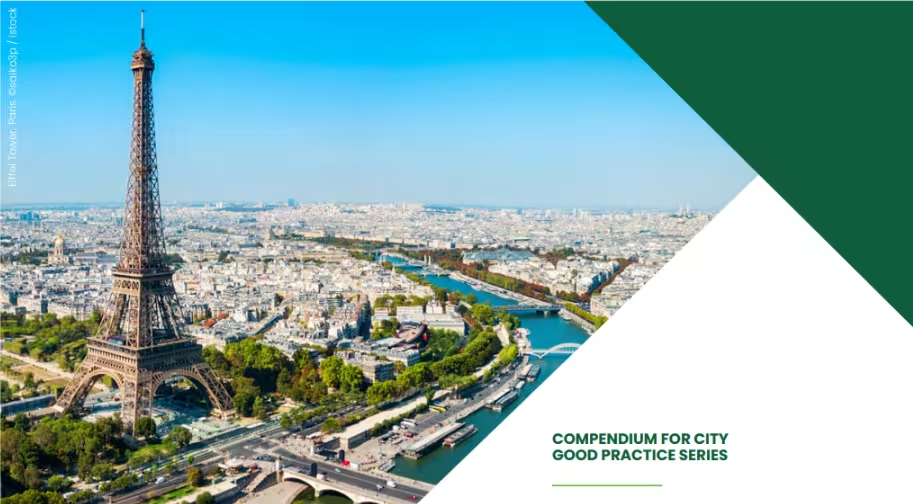
The GPSC is thrilled to launch the Compendium for City Good Practice Series. The series will share good practices from Urban Nature Program lighthouse cities, focusing on urban nature and biodiversity.
How Paris is Leveraging Nature for Climate Resilience is the first in the series and is developed in partnership with the City of Paris. Europe’s densest city, Paris, has limited space prioritized for nature, increasing the impact and regularity of heatwaves, flooding, and water scarcity. Paris temperatures can be up to 8°C hotter than surrounding areas, negatively impacting biodiversity. The economic and health impacts are significant too, with reduced productivity, higher infrastructure costs, and lost tourism revenue.
Paris's new Climate and Energy Plan prioritizes protecting people from the effects of climate change, with measures targeting almost every aspect of the built environment. Nature-based solutions and a strategy of improving biodiversity data, and using this to guide spatial planning and investment, is helping the city respond to climate change and remain globally competitive. A high level of planning and policy integration ensures nature is part of every built environment decision, with urban greening of spaces and buildings, and improving biodiversity driving the city's adaptation strategy.
The series was launched in Istanbul, Türkiye, on 28 May during the first Expert Meeting of the Urban Nature Program, which brought together cities, financial institutions, experts, partner organizations, and architectural firms worldwide to discuss some of the key issues and challenges facing cities in planning and investing in urban nature. The World Bank, UNEP, and ICLEI, in partnership with WRI, C40, and IUCN, launched the Urban Nature Program at the 28th UN Climate Change Conference of the Parties (COP28) in December 2023.
Sign up to our newsletter to receive updates on future City Good Practice Compendiums.