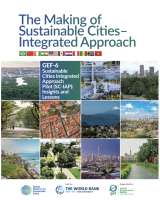



As the UrbanShift Global Platform concludes, the next phase of the GEF Sustainable Cities Impact Program will build on the momentum and progress for sustainable and resilient cities.
In the GEF-8 cycle, the Sustainable Cities Integrated Program (SCIP) aims to build on the successes of UrbanShift and continue to support integrated urban planning with a cohort of 20 countries and almost 50 cities. This brings the total program portfolio to 33 countries and over 90 cities. Spanning across Africa, Central and South America, Asia, and Eastern Europe, the GEF-8 SCIP includes a wide diversity of countries – from least developed to newly industrialized to small island developing states – and will continue to address environmental degradation drivers and urbanization pressures to build net-zero, nature-positive, inclusive, and climate resilient cities.
GEF-8 SCIP adds another 169 million USD of GEF grants dedicated to sustainable urbanization and will be led globally by the World Bank in collaboration with eight other accredited GEF implementing agencies that will lead the country projects. The World Bank and partners will utilize the Global Platform for Sustainable Cities (GPSC) that was created in GEF-6 and leverage the work of UrbanShift to integrate the three phases (GEF-6, GEF-7 and GEF-8), with joint activities to expand opportunities to cities. In GEF-8, three new GEF agencies are joining the Sustainable Cities family; FAO brings its expertise on food and agriculture in the urban context, IUCN will strengthen the program’s work on urban nature and critical ecosystem services for cities, and BOAD joins the cohort of participating multilateral development banks with its rich experience from the West African region.
UrbanShift’s core partners—UNEP, C40, ICLEI and WRI—will support the implementation of the global platform in GEF-8 to ensure continuity and bring along all of the valuable learnings from the past five years of progressive work with cities. UNEP will also directly support Kenya and Sri Lanka in the next phase of the program. GEF-8 will further expand the partnership and broaden the engagement with new international organizations, financial institutions, the private sector, academia, and civil society organizations – focusing on developing innovative and inclusive sustainability solutions, enhancing access to finance, and strengthening local institutional capacity.
In GEF-8, SCIP will focus on three interconnected core themes –
- promoting nature-positive and resilient urban development through nature-based and biodiversity solutions;
- advancing decarbonization of urban infrastructure; and
- enhancing circularity. These efforts will be advanced at the systems level by cross-cutting support to strengthen urban governance, improve municipal finance and private sector engagement, foster demand for innovation, leverage multi-stakeholder partnerships, and expand knowledge by co-developing tools and good practices.