

Mongolia Launches GEF-8 Sustainable Cities Project to Advance Green and Inclusive Urban Development
06 JULY 2026 /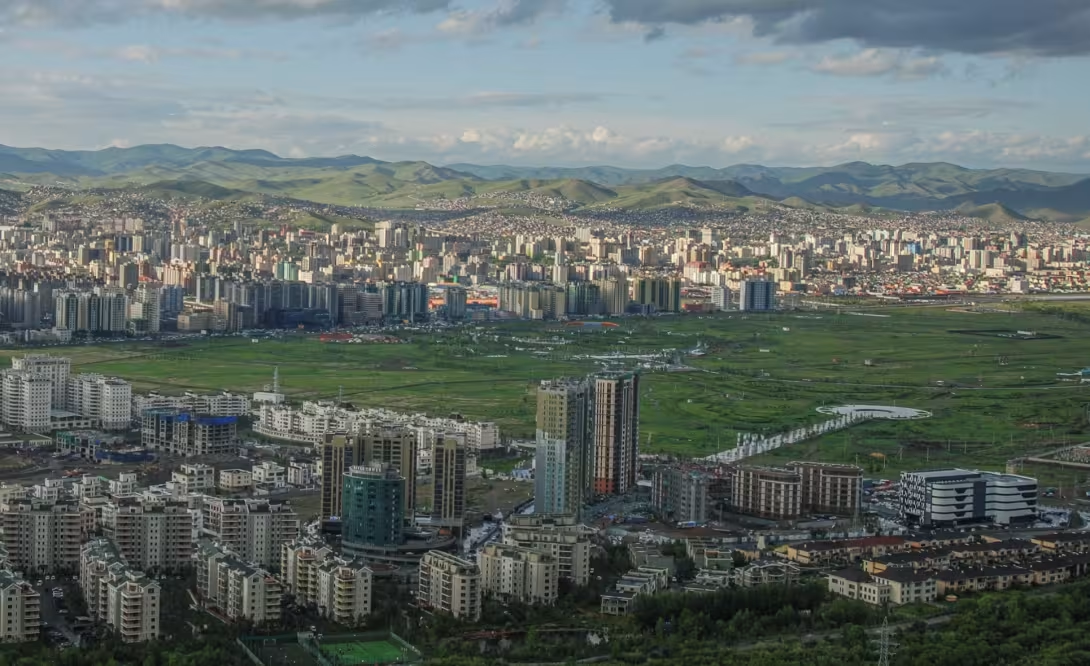
Mongolia has officially launched the Green and Inclusive Cities in Mongolia (GICM) project, marking an important milestone in the implementation of the GEF-8 Sustainable Cities Integrated Program (SCIP). The project will support the cities of Ulaanbaatar, Darkhan, and Erdenet in advancing integrated urban planning, nature-based solutions, innovative urban finance, and green investments that strengthen resilience while improving quality of life.
Funded by the Global Environment Facility (GEF) and implemented by the Ministry of Environment and Climate Change with support from the United Nations Development Programme (UNDP), the project officially commenced with an Inception Workshop attended by representatives from the Government of Mongolia, UNDP, the GEF Secretariat, GPSC, local governments, and development partners.
Opening the workshop, State Secretary Sh. Batbayar emphasized that the initiative represents more than the beginning of a single project, describing it as "a shared commitment to make Mongolia's cities greener, more inclusive and more resilient" through close collaboration with local governments, partner organizations, and citizens.
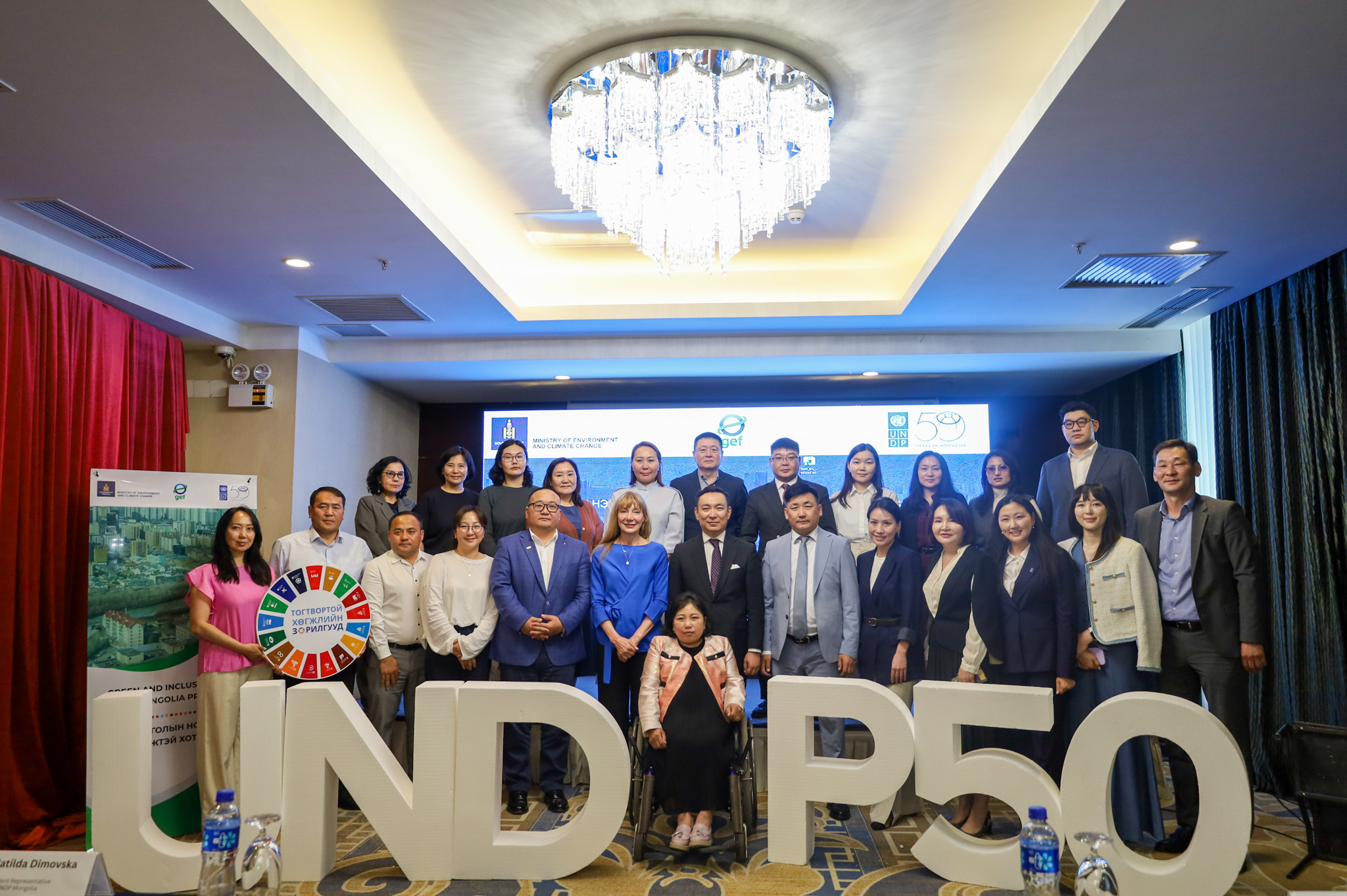
Opening Workshop. UNDP. 2026
Running from 2026 to 2030, the project is supported by a USD 7.26 million GEF grant, complemented by significant co-financing from the Government of Mongolia and partner organizations. Activities will focus on strengthening integrated urban planning, scaling nature-based solutions, piloting green and inclusive investments, and developing innovative financing mechanisms to accelerate sustainable urban transformation.
As part of the GEF-8 Sustainable Cities Integrated Program, Mongolia also joins a global community of cities working through the GPSC to exchange knowledge, build technical capacity, and develop integrated solutions that address climate change, biodiversity loss, and urban sustainability. Through the GPSC, Mongolian cities will have access to global expertise, peer learning opportunities, technical guidance, and practical tools that support the development of resilient, low-carbon, and nature-positive urban systems.
The project also comes at a particularly significant moment, as Mongolia prepares to host the 31st Conference of the Parties (COP31) in 2026. By embedding nature-based solutions into urban planning and investment, the initiative demonstrates how cities can play a central role in tackling climate change, land degradation, and biodiversity loss while creating healthier and more inclusive places to live.
The GPSC looks forward to working closely with Mongolia and its partner cities throughout implementation and to sharing lessons and innovations with the wider global sustainable cities community.