

Rail Plus Property Development in China: the Pilot Case of Shenzhen
28 FEBRUARY 2017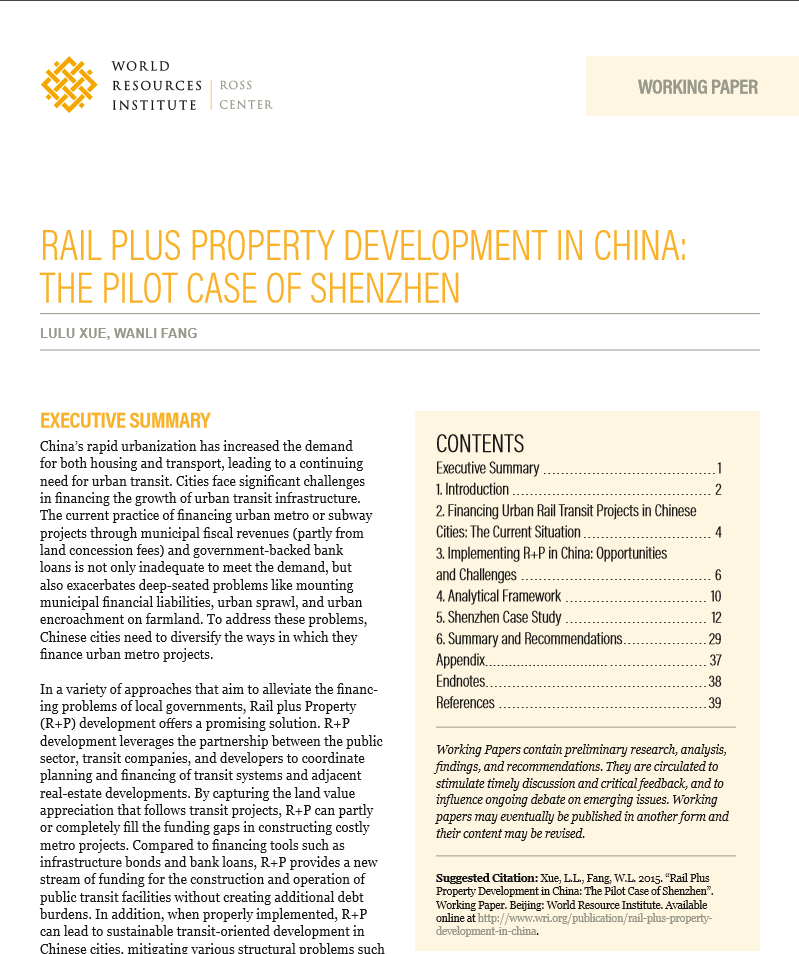
China’s cities face significant challenges in financing the growth of urban transit infrastructure. The current practice of financing urban metro or subway projects through municipal fiscal revenues (partly from land concession fees) and government-backed bank loans is not only inadequate to meet the demand, but also exacerbates deep-seated problems. In a variety of approaches that aim to alleviate the financing problems of local governments, Rail plus Property (R+P) development offers a promising solution. R+P development leverages the partnership between the public sector, transit companies, and developers to coordinate planning and financing of transit systems and adjacent real-estate developments. By capturing the land value appreciation that follows transit projects, R+P can partly or completely fill the funding gaps in constructing costly metro projects. Despite these opportunities, the broad adoption of R+P development in Chinese cities is still hindered by widespread conceptual misunderstandings, lack of political will, and multiple legal, regulatory, and institutional limitations. This paper analyzes the experience of the coastal city of Shenzhen as a successful example of R+P experimentation in China.