

Mapping Social Landscapes: A Guide to Identifying the Networks, Priorities, and Values of Restoration Actors
01 AUGUST 2018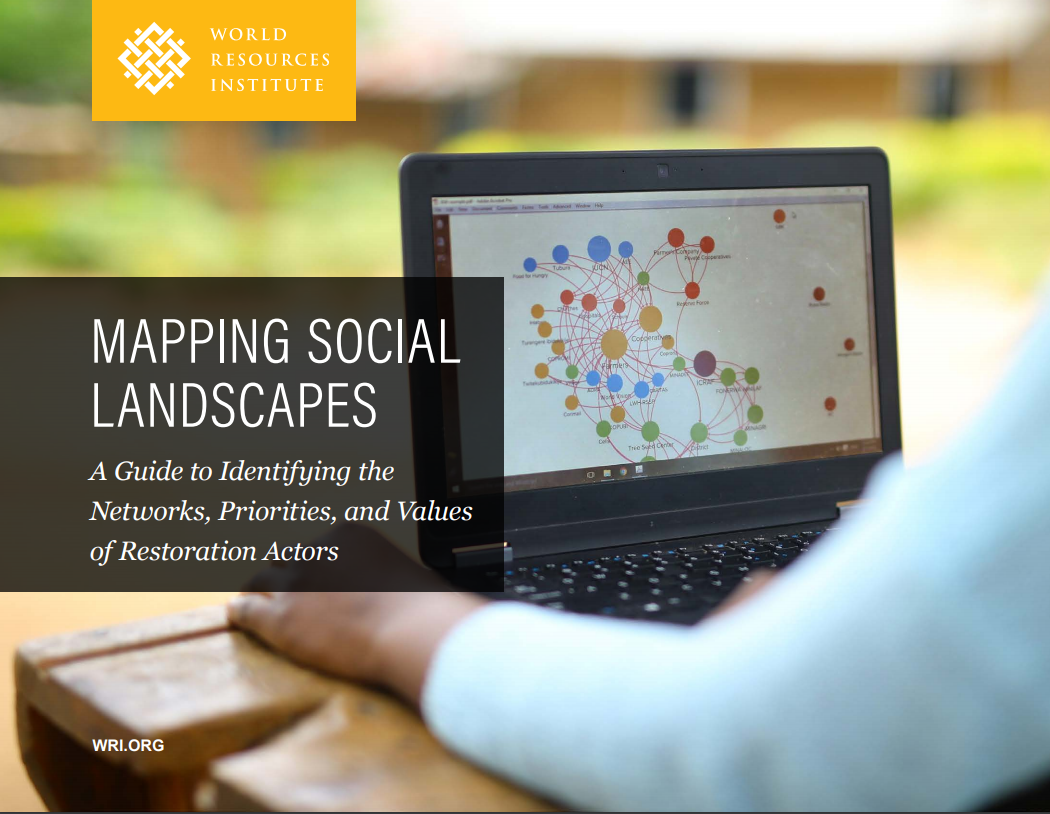
The guidebook takes a new approach to environmental governance by focusing on identifying the social capital of actors within the landscapes. It centers on two main approaches:
- mapping actors’ resource flows
- mapping actors’ priorities and values
Co-written by WRI international offices, this methodology has been tested in Brazil, India, Indonesia, Kenya, Mexico, and Rwanda. The guidebook focuses primarily on restoration, but the same methodologies can be adapted to broader analysis of natural resource governance. By using this guidebook, environmental practitioners can be more efficient with resources, collaboration, and outreach, and better anticipate potential conflicts and bottlenecks.