COVID-19 Pandemic and Sustainable Urban Transformation: Perspectives on City-Level Actions and a Framework for the Future
23 JUNE 2024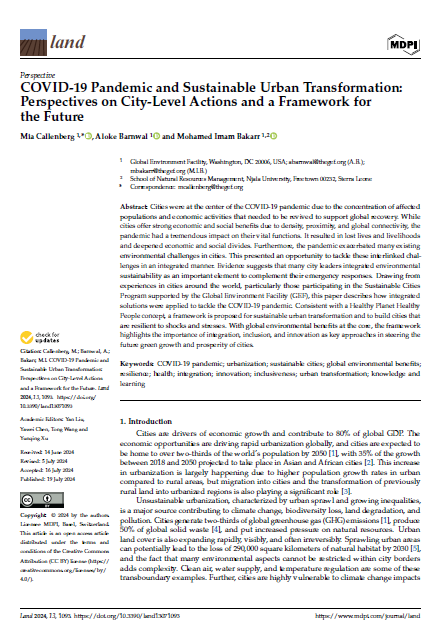
Cities were at the center of the COVID-19 pandemic due to the concentration of affected populations and economic activities that needed to be revived to support global recovery. While cities offer strong economic and social benefits due to density, proximity, and global connectivity, the pandemic had a tremendous impact on their vital functions. It resulted in lost lives and livelihoods and deepened economic and social divides. Furthermore, the pandemic exacerbated many existing environmental challenges in cities.
This presented an opportunity to tackle these interlinked challenges in an integrated manner. Evidence suggests that many city leaders integrated environmental sustainability as an important element to complement their emergency responses. Drawing from experiences in cities around the world, particularly those participating in the Sustainable Cities Program supported by the Global Environment Facility (GEF), this paper describes how integrated solutions were applied to tackle the COVID-19 pandemic. Consistent with a Healthy Planet Healthy People concept, a framework is proposed for sustainable urban transformation and to build cities that are resilient to shocks and stresses. With global environmental benefits at the core, the framework highlights the importance of integration, inclusion, and innovation as key approaches in steering the future green growth and prosperity of cities.